Red Train Blog

Ramblings to the left

The Red Train Blog is a left leaning politics blog, which mainly focuses on British politics and is written by two socialists. We are Labour Party members, for now, and are concerned about issues such as inequality, nationalisation, housing, the NHS and peace. What you will find here is a discussion of issues that affect the Labour Party, the wider left and politics as a whole.

  • Home
  • Topics
    • Topics
    • EU referendum
    • The Crisis in the Labour Party
  • Art
  • Books
  • About us
  • Search
Tony-Blair.jpg

Does Labour need a new Blair?

February 11, 2020 by Alastair J R Ball in The crisis in Labour

On the 27th of February, it will be the 120th anniversary of the founding of the Labour Party. A sobering thought is that Labour has been in power for only 32 of those 120 years. Of those 32 years, 10 of them were under Tony Blair.

Labour is currently having a leadership election where the legacy of the former Prime Minister (as in every Labour leadership election) is a point of debate. In most of the left-wing Facebook groups I’m in, Keir Starmer is being compared to Tony Blair; with this being presented as self-evidently positive or negative.

Due to the unusually high number of election victories (for Labour) that Blair notched up, people have said that Labour needs a new Blair. This is often a coded way of saying that Labour needs to move to accept a broader social consensus, instead of challenging one. This is what Blair did when he become Labour leader, putting to bed years of arguments over the virtues of free-markets. Today, those who admire Blair are reaching for a broad consensus that Labour can accept to win over large sways of the electorate.

Consensus? What Consensus?

Those who suggest doing this assume that there is a consensus to move to. Now is not the early 90s - at the ‘end of history’, there was agreement about the key political issues. Today politics is defined by big divisions, from Europe to identity politics, to economic stagnation. I really don't think there is a consensus for Labour to move to.

Blair accepted the neoliberal consensus so that Labour would be trusted on the economy. Although the Tories remained more trusted on the economy until Britain unceremoniously fell out of the ERM in 1992. My concern is that similar maneuver today is not about adopting an economic consensus, but a social one.

Labour is out of step with the a large chunk of the general public by not wanting to engage in a culture war against popular targets of dislike such as immigrants, Muslims, feminists and London. Labour is not interested in pandering to idea that these things are not British, are fundamentally suspect at best and are at worst working to destroy Britain. I'm glad that Labour is not willing to blow dog whistles or actual whistles about unfamiliar things that most people instinctively dislike. I'm glad that Labour seeks to challenge these popular prejudices. Most people don't want their prejudices challenged.

Before we go any further I want to be clear: this is not dig at people in the Northern and Midlands seats that Labour recently lost. Hostility to immigrants and a willingness to engage in a culture war against things that are seen as not British enough is prevalent across the country. I have encountered it from middle class Londoners, old people, young people, English people, Scots and Welsh people. This isn’t a problem of class, geography or education. It’s everywhere.

Brexit consensus, or lack therefore of

If Labour was willing to “meet people where they are” (as it is often referred to as) on hostility to other cultures and metropolitan values, it would also mean accepting the reality of Brexit. This is unlikely for a Labour membership that is about to elect Keir Starmer as leader. Blair himself has been vocally opposed to Brexit and has become something of a rallying figure for the people who are opposed to Brexit and Jeremy Corbyn's willingness to accept it. However, in a recent interview Blair said Remainers “have got to face up to one simple point: we lost” and that Labour needs a new position now that Brexit has happened. I wonder: how many of Blair's admirers will heed these words?

Even if Labour is willing to accept Brexit AND pander to popular prejudices to meet people where they are, will all this tackle the other major problem for Labour: being locked out of Scotland? I'm not sure how Labour can meet Scottish voters where they are. The Scottish Labour Party has almost destroyed itself through opposing Scottish Independence. Being neutral on the issue won't help and Labour will struggle to win power if Scotland does leave the union. Meeting people where they are has nothing useful to offer in Scotland.

Blair’s legacy

Blair was certainly very good at balancing competing political concerns to convince enough voters that he stood for what they wanted, which meant he had enormous electoral success. However, what he built hasn't lasted. Blair changed politics during his time in power, but politics today feels very unBlair. Boris Johnson, a conservative populist, is Prime Minister. He is very much the anti-Blair, and he won power by appealing to the people strongly opposed to two of the things Blair is most well-known for: supporting the EU and being accepting of immigration. The people who still believe in Blair’s vision may not have been voting for Corbyn, but they weren’t in Johnson's electoral. If anything they voted Lib Dem. Still Johnson has been very successful by finding millions of voters opposed to everything Blair represents.

Does the subsequent anti-Blair reaction to politics reflect the problem of meeting people where they are? People move, and not always in a helpful direction.

I wonder where Tony Blair thinks everything went wrong? Probably when Gordon Brown ousted him from power, or when the Labour Party decided it wasn't happy with what Blair had done. Does he wonder that if maybe he had constrained the banks a little more or intervened in the labour market more or controlled immigration more or not invaded Iraq or been more skeptical of unrestrained capitalism then the situation we are now could have been averted? Does Blair think he’s responsible for the current dire state of our politics. Probably not.

Even if Labour wanted a new Blair, none of the candidates standing to be Labour leader are a new Blair. I don't see any of them transcending left and right politics the way Blair did. Blair was, at the end of the day, a very skilled politician. He was able to do what he did because he played the game of politics very well, not because of the accommodations he made towards people's base conservativism. None of the candidates for Labour leader display a Blair level of skill at politics.

Agreeing with Blair

I'm going to end by doing something that I don't often do: agreeing with Tony Blair. In the above interview, Blair said that Labour needs to “learns the lessons of defeat.” This is true but I'm not sure that the lesson to be learned from Labour's defeat is that we need to meet voters where they are, wherever they are. This would involve a level of pandering to popular prejudices that I'm not comfortable with. Blair was especially good at meeting people where they were, but the fact that we now live in a very unBlaira era shows the limits and risks of this approach.

"Tony Blair" by StefdeVries is licensed under CC BY-ND 2.0 

Related posts
Keir_Starmer.jpg
Sep 30, 2021
Where is Labour going?
Sep 30, 2021
Sep 30, 2021
High-Conflict-Amanda-Ripley.jpg
Aug 17, 2021
The civil war in Labour has become a High Conflict. How do we get out of it?
Aug 17, 2021
Aug 17, 2021
Union-Jack.jpg
Jun 15, 2021
I don’t feel patriotic, but Labour needs to appeal to more than just people like me
Jun 15, 2021
Jun 15, 2021
polling-station.jpg
May 10, 2021
Labour can be the party for Walthamstow and Workington, but it needs a vision first
May 10, 2021
May 10, 2021
polling-station.jpg
Apr 16, 2021
How Labour lost the working-class
Apr 16, 2021
Apr 16, 2021
Labour Party.jpg
Jul 20, 2020
The Fall of the Red Wall by Steve Rayson shows the role that narrative played in Labour’s defeat
Jul 20, 2020
Jul 20, 2020
social-media.jpg
May 26, 2020
Does the left live in a bubble?
May 26, 2020
May 26, 2020
Labour Party.jpg
May 12, 2020
The Labour needs an effective story to start winning again
May 12, 2020
May 12, 2020
Scotland-flag.jpg
Apr 14, 2020
Labour is trapped by the split over Scottish independence in Scotland and England
Apr 14, 2020
Apr 14, 2020
Rebecca_Long_Bailey.jpg
Mar 31, 2020
Who should be the next Labour leader?
Mar 31, 2020
Mar 31, 2020
February 11, 2020 /Alastair J R Ball
The crisis in Labour
Comment
EU flag.jpg

As Britain leaves the EU I am left disappointed in my county

February 01, 2020 by Alastair J R Ball in Brexit

I write this on the morning after the night before that many thought and hoped would not come. Yesterday, at 11pm, the United Kingdom left the European Union. Whatever happens next, that cannot be undone. We are now outside the EU.

Those of us who thought that Brexit was a bad idea have lost the argument. Whether or not Britain should leave the EU has been the defining political question since David Cameron won a surprise majority in the 2015 general election. It has now been settled. We have left.

Now it’s up to those who supported Brexit to show the tangible benefits of leaving the EU. Whatever happens over the next few years, the victorious Leave side cannot fall back on “we have left so everyone has to live with it” or just saying: “The benefit is that Brussels is no longer telling Britain what to do.” Well, sure, but how does that help anyone? We cannot eat our sense of pride in our nation, we cannot be employed by national self-determination and we cannot exert leverage in the world by simply being outside of a political union. It’s up to those who voted Remain to remind Leavers of this.

Frankly, I'm disappointed

Frankly, I’m disappointed that my country has not seen that Brexit is a bad idea over the last three years. The chaos and paralysis Brexit has unleashed should have been enough to convince people this was a waste of time. Brexit was born out of a need to settle a dispute in the Tory Party. It’s not a means to serve the national interest. However, most people have either not noticed this or don’t care, so we’ve got Brexit anyway.

I’m also disappointed in my side, those who advocated against Brexit and have failed to come up with an argument that has made a difference. From Remainers, there has been a complete lack of willingness to reach out to the other side. Instead, we have fallen back on insults and denial. Us Remainers are more interested in expressing our Remainyness through pointless gestures (like hiding 50ps) than in convincing the people who voted for Brexit that it’s a bad idea.

Remainers are more interested in being angry at Leavers than we are in stopping Brexit. We would rather post on Twitter or Facebook about how stupid the other side is, than do anything that would stop the thing we hate so much. I have watched in despair over the last five years as the anti-Brexit cause has gone from smug, to ineffectual, to bitter, to laughable and finally to irrelevant. We have learned nothing and it’s completely depressing.

We have to do better on the next big debate: what to do about the looming environmental catastrophe or it will be the human race that is lost, and not just Britain’s standing in the world.

Why Brexit happened...

There are a lot of reasons why we have left the EU: a nostalgia for a lost Britain that never really existed, the economic impact of neoliberal globalisation, some people’s unease at the cultural change over the last few decades, rising immigration, some outright racism about wanting there to be less brown people or less people with funny languages in the country, and a cultural backlash to socially liberal, metropolitan values that lots of people find alienating. Some of these are valid complaints about the way the country has been run for decades, some are small minded prejudices, and some are both.

If the grievance at the root of Leavers’ desire for Brexit is that people outside London and other big cities have done badly out of the last 10-15 years (or longer) then I can understand that, but I would say to Leavers that Brexit is not the solution to their problems. But what is? People haven’t wanted to give moderate social democracy a chance to sort out their problems. Gordon Brown and Ed Miliband both lost elections.

People also don’t want socialism (or Scandinavian social democracy, which is what the manifestos of 2017 and 2019 were really offering) either, as Jeremy Corbyn was rejected by voters twice. Do people really want a social democrat who is draped in the flag and who isn’t a vegan, craft beer drinking, Picturehouse membership holder, who doesn’t care much for what the London Review of Books thought about the new John Lanchester novel? I doubt it. Do they want a socially conservative, borderline nationalist, bag of flag-waving hot air who will bellow about the glorious history of Britain in lieu of finding a solution to our current problems? It looks like it.

If most people really do think that nostalgia and nationalism are the solutions to all our problems than anyone whose political views are anywhere in the space between David Cameron and Aaron Bastani has a serious problem.

...and what next

Many Remainers I have spoken to think that everyone who voted Leave is a lost cause and that politics will sort itself out when enough of them have died from old age or a diet made up entirely of Cumberland sausage and Yorkshire pudding. They think that Labour must find a new electoral coalition, as Northern and Midlands Leaver voters are beyond the pale, which means winning over the people who really liked George Osborne. They feel that Labour should be the party of bellicose pro-Europeanism and that the next Labour leader should spit in the faces of every Brexit voter and call them a racist.

These are the people who will make Kier Starmer the next Labour leader. I don’t know if this is the route back to power for Labour, or the means to stop the spread of xenophobia we have seen in the last five years, but it will, given the chance, transform the Labour Party into something unrecognisable and engage in a level of triangulation that would make even Tony Blair think this puts political expedience ahead of principal. I’m not hopeful about the future.

Brexit won't resolve Brexit

The mere fact that we have left the EU will not resolve the cocktail of feelings and grievances that convinced people to vote to Leave. Us Remainers need find a way to address these concerns, either directly or indirectly, or they will mutate into something much more terrifying than ripping up the basis of our economy for the last 47 years.

Us Remainers don’t have to accept Brexit and we certainly don’t have to like it. However, if we want to counter the rising tide of xenophobia (or region the EU at some point) then we need to a better narrative than howls of rage that the stupid people have fucked the country. We need something that convinces people who wanted to leave the EU that there is an alternative to wallowing in nostalgic nationalism.

We may have lost of the argument over whether Britain should leave the EU, but there are still many more battles to fight. We need to learn from the last five years and resolve to do better in the future.

EU flag image created by Yanni Koutsomitis and used under creative commons.

Related posts
EU flag.jpg
May 19, 2022
Tory Brexiters are ignoring Northern Ireland because it’s inconvenient
May 19, 2022
May 19, 2022
EU flag.jpg
Feb 1, 2020
As Britain leaves the EU I am left disappointed in my county
Feb 1, 2020
Feb 1, 2020
EU flag.jpg
Dec 3, 2019
Is this election the last opportunity to stop Brexit?
Dec 3, 2019
Dec 3, 2019
EU flag.jpg
Sep 8, 2019
The anti-no deal side need to come up with something better than further delays
Sep 8, 2019
Sep 8, 2019
nigel farage.jpg
Jun 2, 2019
The sudden success of the Brexit Party should make everyone on the left very worried
Jun 2, 2019
Jun 2, 2019
Theresa May.jpg
May 26, 2019
The end of a career that no one will mourn
May 26, 2019
May 26, 2019
EU flag.jpg
Apr 6, 2019
Brexit has broken our politics
Apr 6, 2019
Apr 6, 2019
IMG_4111.JPG
Mar 31, 2019
Should the radical left support a People’s Vote?
Mar 31, 2019
Mar 31, 2019
Brexit-grenade.jpg
Mar 24, 2019
Brexit is eating a shit-sandwich, but No Deal is eating a grenade
Mar 24, 2019
Mar 24, 2019
EU flag.jpg
Jan 27, 2019
Labour must force May to drop her Brexit red lines
Jan 27, 2019
Jan 27, 2019
February 01, 2020 /Alastair J R Ball
Brexit
Comment
Labour Party.jpg

Rediscovering Labour’s broad church

January 28, 2020 by Alastair J R Ball in The crisis in Labour

The civil war that has raged in the Labour Party since Jeremy Corbyn became leader in 2015 must end. As Abraham Lincoln said: a house, divided against itself, cannot stand. Or as David Runciman has said several times: divided parties do not win elections.

Corbyn and his allies fought hard in the civil war against much of the Parliamentary Labour Party, some of the members and lots of media commentators who were opposed to him. However, despite fighting hard he didn’t win the civil war and so it dragged on like a millstone around his neck, weighing him down when he needed to rise in the polls.

Corbyn didn’t win the civil war because it's unwinnable. The only way it could end would be if the leader had the power to purge everyone from the party who disagreed with him. One should not have that power. Only authoritarians can decisively win civil wars. Just ask Oliver Cromwell.

The civil war has rumbled on into the race to succeed Corbyn as Labour leader. After that, it must end if Labour is to stand any chance of winning power and helping the people who have been suffering under what will have been 14 years of Tory rule when the next election comes around. The new leader, even if it’s Rebecca Long-Bailey, will need to come to an accommodation with those in the party who opposed Corbyn.

The acceptance of Labour as a broad church

This accommodation needs to be rooted in the idea that Labour is a broad church that tolerates a range of opinions. This is said a lot, at times by people who used it as a justification to undermine the Labour leader, but it remains true.

The left of the party needs to put an end to the purity tests that alienate lots of people. No one wants to be in a snobbish club that looks down on people who don’t meet an exacting standard. Especially as this standard is often measured in how outraged someone can be on Twitter or in Facebook groups. If someone thinks Tony Blair did a good job as Prime Minister (leaving aside the war in Iraq) then it’s fine for them to be in the Labour Party. Purity tests put people off.

All sides and groups in the Labour Party are guilty of setting purity tests and taking delight in excluding people. Every group is guilty of admonishing someone for expressing doubts about Corbyn’s leadership or that the party is too Remain-y. Too often the factions in the Labour Party have defined themselves more by who they are not than who they are. It’s worth remembering that Blair talked about his vision for socialism when he was running for Labour leader in order to win the support of a membership who are, broadly, socialists. It’s difficult to imagine Jess Philips doing this.

The Labour Party should stand for socialism

Today, as in 1994, the Labour Party is, broadly, a party of socialists. Socialism is difficult to precisely define but, like many political philosophies, you know it when you see it. Socialism can take many different forms and there is room for different interpretations in the broad church of the party. As I said, Blair had a vision for what socialism was in the early 1990s. It’s not a vision I agree with, but it falls within the spectrum of Labour party socialism.

However, socialism can’t mean anything. It can’t be twisted to stand for expanding the reach of markets or from allowing massive inequality. There are things which are not Labour. If you want these things then I would politely suggest that you join another party.

So what is socialism, if it can’t be anything? Ask 100 socialists, or Labour Party members, and will get 100 answers. For me, it boils down to two things: skepticism of markets and striving for greater equality.

Striving for greater equality

Skepticism is of markets means markets needs to be managed if we want to ensure a fair distribution of goods and services. Free markets that are allowed to run riot don’t do this. We can see this from the housing market in the UK to the healthcare market in the USA. It’s worth remembering that even New Labour intervened in markets (such as the minimum wage in the labour market) to ensure some measure of fairness.

The Labour Party should also strive for greater equality. This means, where possible, looking for ways to make society fairer and for wealth and power to be more evenly distributed. This is vague and it's up to the leadership candidates to flesh out what this will mean in practice, but it summarises the core of what Labour should be.

The commitment to strive for ever greater equality needs to be social as well as economic. The Labour Party needs to be committed to social liberalism, equality and inclusivity. Labour must stand up against racism, homophobia, sexism, Islamophobia and other forms of prejudice. This includes Antisemitism, which Labour has been lacklustre in standing up against.

Personal and social freedom

The Labour Party should stand for personal and social freedom, whilst also acknowledging the limits of these freedoms. For example, the Labour Party should defend free speech, whilst acknowledging that it's not okay to racially abuse someone. In striving for greater fairness, Labour should stand for a more economically equal society and one free from prejudice.

There is plenty of room for a broad church within what I have outlined above. My personal views are a lot more prescriptive than what I have described above. I'm happy for there to be people in the Labour Party who I disagree with me, as long as we’re all committed to the broad goals outlined above.

Labour needs to remember it's a broad church to end the civil war that is keeping us from office. We need fewer purity tests and more inclusiveness. Debate is a positive thing, but factional warfare is not. Labour needs to stand for a fairer, more equal, less hateful society, which we can be achieved if we stand together.

Labour Party picture taken by Andrew Skudder and used under creative commons.

Related posts
Keir_Starmer.jpg
Sep 30, 2021
Where is Labour going?
Sep 30, 2021
Sep 30, 2021
High-Conflict-Amanda-Ripley.jpg
Aug 17, 2021
The civil war in Labour has become a High Conflict. How do we get out of it?
Aug 17, 2021
Aug 17, 2021
Union-Jack.jpg
Jun 15, 2021
I don’t feel patriotic, but Labour needs to appeal to more than just people like me
Jun 15, 2021
Jun 15, 2021
polling-station.jpg
May 10, 2021
Labour can be the party for Walthamstow and Workington, but it needs a vision first
May 10, 2021
May 10, 2021
polling-station.jpg
Apr 16, 2021
How Labour lost the working-class
Apr 16, 2021
Apr 16, 2021
Labour Party.jpg
Jul 20, 2020
The Fall of the Red Wall by Steve Rayson shows the role that narrative played in Labour’s defeat
Jul 20, 2020
Jul 20, 2020
social-media.jpg
May 26, 2020
Does the left live in a bubble?
May 26, 2020
May 26, 2020
Labour Party.jpg
May 12, 2020
The Labour needs an effective story to start winning again
May 12, 2020
May 12, 2020
Scotland-flag.jpg
Apr 14, 2020
Labour is trapped by the split over Scottish independence in Scotland and England
Apr 14, 2020
Apr 14, 2020
Rebecca_Long_Bailey.jpg
Mar 31, 2020
Who should be the next Labour leader?
Mar 31, 2020
Mar 31, 2020
January 28, 2020 /Alastair J R Ball
The crisis in Labour
Comment
Union-Jack.jpg

The problem with progressive patriotism

January 21, 2020 by Alastair J R Ball in The crisis in Labour

Here I stand at the nadir of the Labour Party. A party that is still reeling from the body blow it received last year. The party feels lost, unsure of itself, confused about what it wants to be or who it speaks for. Now is a time of great uncertainty. Any of a number of new Labour Parties could emerge from this period of reflection.

One major cause of the defeat Labour suffered in December was that it was not seen as patriotic enough. This caused many past Labour voters to move over to the flag-waving Tories. This division is cultural and not policy-based. It stems from a feeling that Labour was not proud, but ashamed, of our country. One possible Labour Party that could emerge from this confusion is one that is much more patriotic.

Many prominent Labour figures have ideas about how Labour could be more patriotic. From Rebecca Long Bailey’s progressive patriotism to John Healey saying that “the most successful movements of the left have shown pride in the national flag”.

Alienated by patriotism

Personally, I find patriotism alienating. As I don't follow football (or any sport) and I’m not keen on war, I don't associate the health of the nation with who we’ve beaten recently. I feel that patriotism is meant for someone else, like a pub covered in St George's flags: it's not inherently violent, but it's not very welcoming to me. I have tried to think of a type of patriotism that makes me feel comfortable. Maybe something closer to Brit Pop? Although, a vision of patriotism that celebrates the coolness of the music scene of large cities seems like a distant prospect.

I’m not alone in feeling this. Patriotism makes lots of people really uncomfortable. I’m worried that some voters will be alienated by Labour’s newfound love of the flag. Granted, many of these Labour supporters voted for Jeremy Corbyn and I can see why many leadership candidates are not well disposed to that wing of the party. However, I’m worried Labour is taking these voters for granted.

I also have questions about how progressive patriotism (for the want of a better catch-all term) will work. Gary Young has raised the issue of whether Stormzy fits into this idea of patriotism. Is wearing a Union Jack stab-proof vest patriotic? Are his criticisms of Britain something that the newly patriotic Labour Party wants to engage with or dismiss as something only of interest to middle-class London metropolitans and not of value to real people?

Does progressive patriotism allow space for people to criticise patriotism, like Stormzy does? Will legitimate concerns about patriotism, such as the fact that it can promote a rose-tinted view of our country's colonial history, be heard? Is the British Empire something for progressive patriots to celebrate or criticise? Probably both, but selling that nuance to an electorate with increasingly short attention spans will be difficult.

What is regressive patriotism?

If progressive patriotism sums up everything that is good about patriotism, then what is regressive patriotism? What is bad patriotism? Xenophobic nationalism, obviously I hear you say. The BNP. The EDL. Tommy Robinson. UKIP waving the flag while spreading disinformation about migrants with HIV. All this is clearly bad and the Labour Party must be critical of it, but where is the line? Where does patriotism become regressive patriotism?

Is it regressive patriotism to want to reduce immigration? Is it bad patriotism to be worried about the growing number of Polish shops or Mosques? I would say that it is, to all of the above, but is the Labour Party prepared to make the argument that it's patriotic to want more immigration? Can Labour convince people that it loves the country whilst the country changes into something that many self-described patriots are uncomfortable with (i.e. more multicultural and less white)?

For progressive patriotism to work, our understanding of regressive patriotism needs to be more than just “people waving the flag with Nazi tattoos are bad, everyone else waving the flag is good.” It needs to engage with the fact that some people who say that they don’t like the changes in their communities or feel alienated by London, really mean that they don’t like the number and prominence of black and brown people these days.

Subtle regressive patriotism

Patriotism can be hostile towards people (migrants and people born in Britain alike) without being explicitly racist. When this occurs it’s subtler than an explicit racist using the flag to justify their racism. It could come down to tone of voice or context in which patriotism is being invoked. It could be in the way that “the people” in British people are defined. Regressive patriotism declares that some people are not properly British, without being explicitly racist.

The people who experience this subtler form of regressive patriotism are more likely to not be white, not have a British ancient, and not be a Christian or an atheist. We need to take different people's different experiences of patriotism into account when we state what is and is not progressive patriotism. I'm worried that a person of colour or a migrant’s concerns about patriotism (arriving from how they have experienced patriotism, which is different to how others experience it) might be dismissed as a metropolitan liberals’ aversion to patriotism, or not understanding patriotism, or simply just being “too sensitive.”

The direction of the Labour Party

Labour needs to change to win, that much is clear. Labour can't help the homeless, those struggling on zero-hour contracts or children in poverty unless we start winning. However, I’m worried that progressive patriotism is a sign that Labour is moving away from the values that I want a Labour government to embody. Labour needs to win, but it must not turn its back on opposing xenophobia and social conservatism in order to do it.

If Labour is to embrace patriotism in order to better appeal to the voters it lost, then what other important positions will be dropped if they’re seen as unpatriotic? Being skeptical about getting involved in foreign wars? Tackling inequality? Stopping the environment emergency? How do we patriotically stand up for communities that have been over-policed?

Progressive patronising

Labour also cannot simply just wave the flag to win back the voters it has lost. Progressive patriotism could become progressive patronising, if it isn't a broader cultural change across the party to meet voters in lost constituencies where they are. Being thought of as patriotic involves than just listening to people from small towns or northern constituencies that have abandoned Labour. If Labour wants to be patriotic it needs to do more than say it’s patriotic; it needs to be patriotic in a way that people recognise.

Labour needs to do something to win back the voters that have been lost. Progressive patriotism may be a way to do this, but Labour must not alienate one group of voters in the rush to embrace another. For progressive patriotism to be a success (or any project aimed at making Labour more patriotic) it will need spaced for a nuanced criticism of patriotism that takes into account a wide range of people's experiences of patriotism.

January 21, 2020 /Alastair J R Ball
The crisis in Labour
Comment
Corbyn.jpg

2019: The year of rapid motion

December 30, 2019 by Alastair J R Ball in Year in review

2018 was year of marginal gains for the left and little change overall. Stagnation gripped the world as politics was unable to deal with a series of massive problems. This included slow economic growth and the rise of authoritarian populism on the world stage, to Brexit and parliamentary deadlock in the UK.

This year was the year of rapid motion, of sudden leaches forward, as if the pent-up tension had been suddenly released. Forward motion is not the same as progress and much of this motion was away from the goals the left want to achieve.

The UK

Early in the year, the looming Brexit deadline and then Prime Minister Theresa May’s inability to pass a withdrawal deal through parliament led her to seek an extension to the Article 50 period. This was, finally, some decisive action to prevent a No Deal Brexit disaster. Despite being granted extra time via two separate Brexit extensions, May was still unable to pass her Brexit deal.

This fuelled popular anger at Westminster elites and fed conspiracy theories about MP trying to stop Brexit, which was odd because many of the most pro-Brexit Tory MPs were the ones voting against May’s deal. Against this background, Nigel Farage founded a new political party, the Brexit Party, which comfortably won the EU election in May. He seized on populist anger at the lack of Brexit and the Tories suffered their worst electoral performance ever, winning only 9% of the vote. The infighting this plunged the party into went beyond parody to become an existential threat to the party’s future.

Farage’s success was short lived, as May resigned and the Tories quickly choose Boris Johnson as their new leader. Johnson’s strong pro-Leave credentials led to him winning back much of the support that had bled away to the Brexit Party. First the Brexit Party’s, and then the Tory party’s, ability to harness anger at the lack of Brexit are a stark warning to those on the left and the Remain side about how strong the desire for Brexit is in some parts of the UK.

These Brexit delays did not lead to significant progress for the anti-Brexit movement. The emergence of a movement to stop Brexit continued, with new Lib Dem leader Jo Swinson promising to revoke Article 50 and cancel Brexit if they won a general election; an outcome as likely as Buckingham Palace being turned into a BrewDog. This was the only significant gain for Remain in 2019, a free vote in parliament on a second referendum failed to win a majority. Although the number of people opposed to Brexit remains high, this figure is not growing.

Johnson becoming Tory leader broke the deadlock on Brexit. He renegotiated May’s exit deal and put a vote before parliament that seemed likely to pass, had MPs not found a last-minute loop hole that allowed them to delay the decision further. This was followed by a general election in December that not even serious politics nerds like me could get excited about. Although it looked for a while like this would result in another hung parliament, and more indecision, in the end Johnson won a large majority.

Johnson’s victory has ended the era of parliamentary stagnation and deadlock that has gripped British politics since the referendum. Now there is a clear government, with a clear majority and a clear agenda. It will be one the left finds abhorrent and we need to put our energy into fighting this government over the next five years.

In many ways the 2019 election was what the 2017 one appeared to be in its initial stages, i.e. a clear victory for the Tories as politics reforms around Remain/Leave lines and the Tories succeed by winning over many working-class Labour Leave voters. Despite more people voting for Remain than Leave parties, there is now a clear majority for Leave in the Commons (due to the vagaries of First Past the Post) as well as enough Tory MPs to make any of Johnson’s whims a reality.

The poor performance of the Labour Party in this election was partly due to the massive unpopularity of Labour leader Jeremy Corbyn, whose personal poll rating never recovered from the dip it took after he questioned Russia’s involvement in the Salisbury poisonings.

I was a supporter of Corbyn since he announced that he was standing to be Labour leader. I wanted him to move the political debate leftwards, which to a degree he succeeded in. However, as well making new left-wing arguments possible, it was necessary for Corbyn to win power and implement left-wing policies. Only through people seeing the positive benefits to their lives of enacting left-wing policies will a larger movement further to the radical left be achieved. Ending capitalism before it destroys us all in a climate apocalypse can only be achieved if the left can implement the social democracy that Corbyn was offering.

Corbyn’s massive unpopularity with voters was a problem. But there were other factors in Labour’s defeat, many of which pre-date Corbyn becoming leader. The collapse of Labour’s traditional voting coalition, as towns become more socially conservative and cites become more socially liberal, contributed to David Cameron’s surprise victory majority in 2015. Brexit is also a major issue; Corbyn was forced against his instincts to move the party to a more Remain position to counter what turned out to be a greatly exaggerated threat from the Lib Dems. This played perfectly into Johnson’s hands. His simple and effective “get Brexit done” message allowed him to force a crowbar into the existing fissures in Labour’s northern red wall and then collapse it.

The issue of Brexit and the paralysis and division it has created has prevented the left from engaging with the problems exposed by Labour’s 2015 defeat. The splintering of the left voting coalition is a problem across the Western world, from the USA to Germany. Now that it looks like Brexit will be resolved (Johnson has managed to pass his Brexit deal through parliament, so Brexit is now definitely happening) the left needs to focus on this key issue of the growing political divide between Bolsover and Bethnal Green.

The stakes couldn’t be higher. This could be the most right-wing Tory government ever. Homelessness and child poverty have shot up since the Tories came to power nearly a decade ago. Many people are working several jobs but are still unable to afford both food and rent. Our schools, hospitals, roads and police services are desperately underfunded. Many people are suffering after a decade of stagnant wage growth. The country needs rapid motion towards something better, however, this year the motion has been towards something worse. Johnson and the Tories will not address any of these problems, so it is up to the left to be the champions of all the people who are suffering and to deliver some meaningful change.

The USA

Following an indecisive mid-term election in 2018, American politics also seemed to break the deadlock this year. Congress finally acted against the many astonishing abuses of power by President Donald Trump and impeach him. This had more to do with a new democratic house majority than it did with Republicans finally waking up to the awfulness that Trump, his norm-shattering behaviour, and his legion of white nationalist supporters represents. The Republicans are continuing their strategy of feeding the tiger of Trump and everything he represents in the hope that he will eat the Republicans establishment last. This means that the Impeachment hearings are unlikely to remove Trump, but will at least record for posterity that some people were opposed to him abusing his office to enrich himself.

The race to be the democratic nominee to face Trump in the election this year has narrowed, and the choice appears to be between four main candidates: Elizabeth Warren, Bernie Sanders, Pete Buttigieg and Joe Biden. The democrats have not decided on what sort of party they want to be, or how best to run against Trump, but clear figureheads for the different options have emerged. Biden and Buttigieg stand for retaking the centre ground of American politics and fighting the election on a “return to normality” against the madness of Trump. Warren and Sanders stand for offering the voters something more radical, a chance to make people’s lives better, in order to beat Trump by inspiring hope in something better.

American politics often appears frighteningly right-wing to me and Biden’s past actions on busing, for example, would make anyone to the left of Farage in the UK very uneasy. Despite this, I can’t help but be encouraged by Sanders and Warren offering a chance to move the political debate in the US left-wards. Although, my experiences of recent general elections have taught me to be wary of hope.

Impeachment will likely play into Trump’s tiny hands and allow him to paint himself as man of the people against the establishment trying to persecute him. The fact that the left in America have allowed a billionaire to convince blue collar America he is as a man of the people is a terrible indictment of how ineffective the left in the States has been. It’s on par with the British left allowing an Eton-educated classist to present himself as a man of the people. In the bizarre politics of the early 21st century, it’s crazy that the fact that I have a membership of the British Museum makes me more establishment than a Prime Minister who speaks ancient Greek, badly, simply because I am on the left.

The populist realigning of politics has been at the expense of the left. The failure of left-wing ideas to combat right-wing populism was summed up by technocratic attempts to stop the projects of the right without engaging with why they are popular. This was summed up by the impeachment of Trump, instead of voting him out, or revoking Article 50, instead of convincing people that Brexit is a terrible idea. These actions have been generally led by those on the soft left, but they show an inability to grapple with the reasons why we are losing.

The world

Across the world this year we saw an explosion in climate activities. This is an area of sudden motion that offers some encouragement to the left. Again, years of pent up frustration about the lack of action to tackle the greatest threat to human civilianisation since the atomic bomb has spilled forth in people young and old (although mainly young) taking to the streets to demand action from governments.

We had Greta Thunberg addressing the UN, school children on strike, Extinction Rebellion shutting down central London and Labour making its most radical commitment ever to action on the environment. While Australia burns and right-wing politicians from Trump to Johnson refuse to do anything about the looming disaster, the left needs to build on this energy and achieve real progress on stopping a climate disaster.

Despite encouraging levels of climate activism, the majority of the rapid motion across the world was towards nationalism. Italy narrowly missed out having a far-right government but there are still strongmen in charge of Russia, Poland, Hungry, the Philippines and Turkey. The left needs a counter narrative to the one that is luring voters towards nationalism if we are to stop the rapid progress of strongmen, nationalists and racists across the world.

The future

A new decade dawns and we are looking at at least five years of Tory rule in Britain or possibly even a Tory government for the entire 2020s. Trump could win re-election or Mike Pence could take over and be even worse. There is a strong possibility that the next year or decade could be a time of movement away from the left, so we need to be ready to fight in the streets, on the doorsteps, in legislatures and online.

The 2010s have been a lost decade marred by the success of the right and the far-right, and we need the 2020s to be different. The fight against the right starts with the London Mayoral election in May and then the US Presidential election in November. Hopefully, this time next year I’ll have good news to report on these fronts.

The coming decade also offers existential threats to the entire United Kingdom. The success of nationalists in Scotland and Northern Ireland means that in ten years’ time we could be looking at a very different United Kingdom. Certainly, Scottish independence will be a major issue over the next few years.

In 2020 itself we will see a Labour leadership election and a chance for the party to tackle the crucial questions of who do we represent and what do we stand for? It’s currently unclear exactly who will be standing for Labour leader and I’m keeping an open mind about any prospective candidates. I have set out three tests that any candidate looking for my support (massive boon that would be, I know) would have to meet.

Next year could be another year of rapid change. Brexit will happen and the politicians who promoted it will have to reconcile what they promised with reality. The same goes for Johnson, and the nurses and police he promised in the general election. Another area for change could be the economy. We are overdue a recession as they have occurred regularly once every ten years since the 1970s and we haven’t had once since 2008. Many of the weakness that the 2008 global financial crash exposed haven’t been dealt with, so the impact of a second recession after years of anaemic growth could be devastating.

I’m not sure what the immediate future or the next decade will hold, but based on the last year and the last decade there will likely be sudden and surprising changes. We are going through a phase of global political change and if the last few years have taught us anything it’s that anything is possible. The old rules are being ripped up and the risks and opportunities are immense. With that in mind, I’m wishing you all a safe 2020 and 2020s.

Picture of Jeremy Corbyn taken by Garry Knight and used under creative commons.

Related posts
Keir_Starmer.jpg
Dec 30, 2024
2024: The year of volatility
Dec 30, 2024
Dec 30, 2024
Keir_Starmer.jpg
Dec 31, 2023
2023: The year nothing got better
Dec 31, 2023
Dec 31, 2023
Liz-Truss.jpeg
Dec 30, 2022
2022: The year everything got worse
Dec 30, 2022
Dec 30, 2022
Dec 31, 2021
2021: The year we failed to rebuild
Dec 31, 2021
Dec 31, 2021
Jul 31, 2021
7 lessons from 10 years of the Red Train Blog
Jul 31, 2021
Jul 31, 2021
Dec 30, 2020
2020: The year that things fell apart
Dec 30, 2020
Dec 30, 2020
Corbyn.jpg
Dec 30, 2019
2019: The year of rapid motion
Dec 30, 2019
Dec 30, 2019
polling-station.jpg
Dec 30, 2018
2018: The year of stagnation
Dec 30, 2018
Dec 30, 2018
polling-station.jpg
Dec 31, 2017
2017: The year normality returned
Dec 31, 2017
Dec 31, 2017
Dec 31, 2016
2016: the year everything stopped making sense
Dec 31, 2016
Dec 31, 2016
December 30, 2019 /Alastair J R Ball
Year in review
Comment
Labour Party.jpg

What should Labour do next?

December 26, 2019 by Alastair J R Ball in The crisis in Labour, Satire

I’m just starting to sober up after a week of Christmas boozing and drowning my sorrows after last Thursday’s catastrophe. In this brief moment of clarity I wanted to get some notes down on what the fuck Labour does next. We have many options, none of them certain to work, so let's review them.

Win back the white working-class?

White working class people in small towns aren’t voting Labour anymore. This isn’t a problem caused by Jeremy Corbyn or unique to the UK, however the election shows that it’s particularly acute right here, right now. 

The Labour Party was founded as the political representatives of the working class and whatever we were doing in the last election was not representing the views of the working class. There's no way we can win the support of the working class to form a government to tackle the problems of housing, social care, education, etc. whilst also telling working class people that they're stupid and racist. That's neither accurate nor a good strategy.

The obvious solution is to go full Blue Labour, i.e. find a Labour leader who is pro-Brexit, anti-immigration, happy to do speeches in front of the St George’s Cross and willing to indulge people in their casual suspicion of foreigners and benefits claimants in order to win back the support of the voters that the Tories just won, which allowed them to demolish Labour's red wall.

I guess in this scenario people like me, i.e. metropolitan, university educated, under 40, craft beer drinking (I’m literally writing this in the Brixton Craft Beer Co while drinking a pint of Earl Grey IPA), vegan burger eating, podcast listening, liberal socialists are just supposed to go fuck ourselves. Or we’re supposed to vote for a Labour leader who says “people are right to be concerned about how much Polish they hear on the bus” because the candidate for the other side has even more contempt for us. I call this the Joe Biden strategy: vote for this awful person because he might win and he’s less awful than the right wing candidate.

Of course there are those who think that Labour is remiss for not representing the views of the white, Northern man drinking Ruddles Best in a Wetherspoons, who thinks most Muslims aren’t properly British, immigrants are taking our jobs and not working them (to be fair that guy was from East London like me), that London is a fallen city because they made the mistake of being tolerant and that the measure of a strong leader is the number of countries they're willing to reduce to nuclear ash in a fit of pique. (If this sounds overly reductive, I just described myself as vegan despite loving meat because it fits my personal stereotype).

To the charge of Labour not representing lazy Northern stereotypes: you’re probably right, but the issue with politicians who pander to popular prejudices in order to educate people is that for some reason they never get around to educating people out of their prejudices but are really keen on the pandering. All this means I'm not keen on the above.

Being very pro-EU?

An alternative view is that Labour should be more anti-Brexit and pro-EU. Jeremy Corbyn was at best lukewarm warm to the EU and it cost him votes. 16.1 million votes is more than enough to form a government so being the party of the people opposed to Boris Johnson’s plan to literally drive a forklift through our economy is not a bad strategy, as everyone likes the guy at a party who said “I told you so” after a badly planned, drunken chinese lantern launch results in a car being set on fire. (I know this from personal experience.)

Seriously, there is a lot to be said for being socially liberal, open (whatever that means, but I think you know, wink wink), pro-business in a sort of “unfettered capitalism is bad but surely not everyone who wants to start a company is awful” sort of way. Also the alliance of people who hate Brexit + people who hate the Tories is a strong one.

On the other hand there are easier ways to hand the right-wing papers the perfect chance to paint the Labour Party as the enemies of ordinary, decent, salt-of-the-Earth people. Having John McDonnell urinate on The Cenotaph for one. This position would go down well with the #FBPE crowd, (an excellent bunch of people who think that everyone not gagging to make Lord Andrew Adonis leader of the Labour Party is vaguely suspect) but I'm not sure who else it wins over. Many Remainers voted for Boris and his very hard Brexit.

There are not enough people living in the right places for Labour to win an election under First Past the Post as a Remain Party. Most Remainers are clustered in cities where Labour is already strong and not in the towns Labour needs to win. Also, most people who endorse the idea of going back to 1997 usually talk about being realistic in their offering, meeting voters where they are and doing what it takes to win. Reconciling this with opposing the result of a referendum frankly doesn’t make sense. So making Labour a Remain party is not going to work.

Some horrible combination of the above

Doing full Blue Labour or being a strongly Remain party are both good ideals, what we’re likely to get is the crappiest execution of them. Just like Corbyn is the crap execution of every Owen Jones column ever written, what we’re likely to get next will be the crap version of whatever we want. In our heads, a speech that acknowledges people’s concerns about immigration whilst also accepting the crucial role that immigrants play in our society may sound like a transcendent Jed Bartlet monologue, but it will actually sound like a politician giving a vague politician answer that pleases no-one whilst said politician simultaneously trips up over their own shoes.

If there was a smooth operator in the Labour Party who had the pop culture cool of Tony Blair, whilst also having the dogged principles of Clement Attlee, the intellectual clout of Gordon Brown and the media savvy of Harold Wilson they would have come to the fore by now. Wanting Keir Starmer to be that person doesn’t make it true. The Labour Party isn’t well organised enough to suppress a brilliant leader if they existed. Please remember that whatever you want from a Labour leader in your imagination you’ll get the Tesco Value version of that vision, and like Tesco’s value toilet paper, it will fall apart under use. I speak from literal and metaphorical experience.

Don’t get me wrong, I would love the Labour Party to get good at politics again. I just want to inform those who think that the solution to Labour’s current woes is to make a full throated defence of Britain’s EU membership, whilst also fighting and winning a culture war in Britain’s Small towns that this won’t work and the amount of glue they’ve sniffing is doing some bad to their brains.

What should Labour do next?

Whoever we choose as the next Labour leader will get monstered anyway. We could find the blandest, most inoffensive, loveable children’s TV presenter and the right-wing media will convince everyone that they’re a dangerous Marxist who wants to nationalise your Gran, whilst also being a feminist culture warrior who wants to make your dad your mum, replace the Queen with Sandi Toksvig and spend their entire time in government apologising for the British Empire. The Labour Party could make Alan Sugar leader and some people would still think he’s dangerously left-wing.

If anyone wants to be Labour leader given everything I have said, then fair play to them. I don’t want to do it. If someone really thinks they can thread the needle of working-class Labour heartland, metropolitan liberals and swing voters whilst also taking on the right-wing media establishment then they’re welcome to have a crack at it.

What we shouldn’t go for is someone who really appeals to one part of the coalition and believe the rest should just fall in line because they should. We tried that and it didn’t go so well. Just because the metropolitan liberals have had a crack winning power by doing things that they like and being rude about people who think differently, doesn’t mean it’s now time for someone else to piss off a different part of the Labour coalition by ignoring them.

It’s not simple enough just do Blue Labour, or just be pro-EU, or just being a sensible centrist, or just be a socialist. Labour needs to appeal simultaneously to lots of different people in lots of different places to win power and it’s time we started reckoning with the complexities of that. So, as I have said before ,let’s hear some ideas of how we get out of his hole. That’s what Labour should do now.

Labour Party picture taken by Andrew Skudder and used under creative commons.

Related posts
Dec 11, 2025
Better content moderation for better discourse: A conversation with Madhuri Rahman of WeLivedIt.Ai
Dec 11, 2025
Dec 11, 2025
Oct 31, 2025
Farage’s new immigration plan is cruelty as a governing principle
Oct 31, 2025
Oct 31, 2025
Trump-rally.jpg
Sep 30, 2025
Dr. Strangelove goes to Tehran: The hottest new war nobody ordered
Sep 30, 2025
Sep 30, 2025
Sep 16, 2025
The right finally discovers that life sucks for Millennials, but guess who they still blame
Sep 16, 2025
Sep 16, 2025
960px-Official_portrait_of_Angela_Rayner_MP_crop_2,_2024.jpg
Sep 9, 2025
Rayner’s resignation is another unforced error from Labour
Sep 9, 2025
Sep 9, 2025
Union-Jack.jpg
Aug 20, 2025
Who really holds power? The cultural illusion of middle-class dominance
Aug 20, 2025
Aug 20, 2025
Labour Party in parliament.jpg
Aug 2, 2025
What would Max Weber make of our politicians?
Aug 2, 2025
Aug 2, 2025
Jul 28, 2025
Why social media platforms spread the worst political messages
Jul 28, 2025
Jul 28, 2025
Trump-rally.jpg
Jun 20, 2025
Elon Musk and Donald Trump: The Beavis and Butt-Head of right-wing edge lords
Jun 20, 2025
Jun 20, 2025
Capitalism.jpg
May 27, 2025
“That’s Your GDP”: Labour’s big growth delusion
May 27, 2025
May 27, 2025
December 26, 2019 /Alastair J R Ball
The crisis in Labour, Satire
Comment
Labour Party in parliament.jpg

Keeping an open mind on the next Labour leader

December 19, 2019 by Alastair J R Ball in The crisis in Labour

The next leader of the Labour party will walk into a staggeringly difficult job. They will be tasked with grappling with why Labour lost so badly, how to hold the party together, and working towards being able to win an election again. Labour members like myself owe it to anyone running for the position to keep an open mind and give them a fair hearing.

There have already been accusations that those of us on the party’s left simply want ‘continuity Corbynisn’ – to plough on as if the defeat hadn’t happened. This may be true of some, but it is not representative. I have seen more self-awareness and soul-searching over the past few days than ‘one more heave’ naivety. Articles from prominent left wing commentators such as Richard Seymour and Gary Younge have shown humility, reflection, and willingness to own the defeat. The same goes for the Twitter feeds of Corbynistas like Ash Sarkar and Owen Jones.

To move forward together, all wings of the party need to go into listening mode and be willing to explore and discuss big ideas. This isn’t a comfortable time for the left, and neither should it be. In that spirit, I am willing to listen seriously to any potential candidate for the job, whether they come from the left of the party or not, as long as they meet three preconditions.

Acknowledge left wing members

Any candidate will need to accept the existence of, and be ready to engage with, the large proportion of party members who supported Corbyn’s leadership.

This doesn’t mean shying away from criticising Corbyn’s record. Neither does it mean they cannot call out abusive or anti-Semitic behaviour among a minority of left wing members. Both of these are necessary. But what I will not accept is tarring all left wing members with the same brush, or writing us off as a ‘cult’. This has never been fair, and it does plenty of decent people a disservice.

Candidates should also acknowledge that the predominantly young members who joined the party in the last couple of years, many of whom put time and effort into campaigning for Labour, are an asset – not a liability. Momentum mobilised many more activists than would otherwise have been the case and does not deserve to be denigrated for it.

In a ‘broad church’ we need to respect each other. That cuts both ways; there must be no return to the systematic exclusion of the left of the Blair years.

Be willing to seriously analyse the defeat and the way forward

This is the opposite of relying on pithy, simplistic explanations that suit factional narratives. The truth is that we don’t have all of the answers yet. That process will take time, honesty and openness. It isn’t enough to blame only Corbyn, Brexit, the media, the manifesto, ‘Workington Man’ or any other single factor for the defeat. It’s far more complex than that.

Candidates should also look at the longer-term fracturing of the party’s electoral coalition and, more importantly, how it may be reconstructed. What strategy might bridge the increasing cultural divide between older, socially conservative ex-Labour voters in the North and Midlands, and socially liberal, anti-Brexit young people?

The former group, the retired and soon-to-retire baby boomers, are electorally powerful due to their numbers, so working out strategies to appeal to them is unavoidable. However, a tilt towards social conservatism (as typified by the half-baked ‘Blue Labour’ idea) is not a solution. It would alienate Labour’s young supporters who, after all, are the party’s future. We’ve heard enough dog whistles during this campaign from the Tories; the last thing we need is Labour to add their own. You cannot out-Tory the Tories, and I don’t want to see Labour try. Aside from any moral considerations, doing so is a sticking-plaster, not a solution. No more ‘controls on immigration’ on mugs, in other words.

No candidate has the answers to these structural, even existential, questions yet. We ought to be highly suspicious of anyone that claims to. What Labour needs is a wide-reaching debate in good faith, as difficult as that might be at the moment. Not an incriminating blame game that obscures the complexity of the problems.

Prioritise the climate crisis

The impending climate emergency isn’t going to wait another five years for Labour to get its act together. Time to act is running out fast, and an incoming Labour leader would need to be ready to provide strong opposition on this issue with immediate effect.

Anyone who is willing to seriously prioritise this deserves consideration. Sadly, Labour’s defeat means they are not implementing the New Green Deal as I write this. The young people who overwhelmingly voted for them face a future in a warmer, less stable world. The party owe it to them to at least keep the issue on the agenda, and not allow the Tories to get away with inaction.

Equally, a candidate throwing the climate under the bus because ex-Labour Tory voters are perceived as not caring about it represents a moral failing that I would be unable to see beyond, regardless of what else the candidate stands for.

A starting off point

These three criteria are intended as a reasonable jumping off point – not a comprehensive wish list. I could certainly produce a much longer wish list of what I’d prefer the next leader to be like, but that is not the point we’re at. The left needs to focus on listening and reflecting – not demanding – right now. It’s also too early to get into policy territory just yet. That ought to be the end of the process, not the beginning.

There are plenty of other possible preconditions that spring to mind. Many would agree that the next leader should be female – it’s shameful that Labour have never elected one. Others would say it must be someone from outside of London, or who took a certain position on Brexit. Personally, my instinctive preference is for a woman candidate, from the left of the party, who supported Corbyn and Remain.

But preferences are not preconditions. As the candidates begin to throw their hats into this unenviable ring, I will remain open minded and give fair consideration to anyone who can meet the above three criteria, whether they are from ‘my’ wing of the party or not. I sincerely hope the rest of the left will do the same.

Related posts
Dec 11, 2025
Better content moderation for better discourse: A conversation with Madhuri Rahman of WeLivedIt.Ai
Dec 11, 2025
Dec 11, 2025
Oct 31, 2025
Farage’s new immigration plan is cruelty as a governing principle
Oct 31, 2025
Oct 31, 2025
Trump-rally.jpg
Sep 30, 2025
Dr. Strangelove goes to Tehran: The hottest new war nobody ordered
Sep 30, 2025
Sep 30, 2025
Sep 16, 2025
The right finally discovers that life sucks for Millennials, but guess who they still blame
Sep 16, 2025
Sep 16, 2025
960px-Official_portrait_of_Angela_Rayner_MP_crop_2,_2024.jpg
Sep 9, 2025
Rayner’s resignation is another unforced error from Labour
Sep 9, 2025
Sep 9, 2025
Union-Jack.jpg
Aug 20, 2025
Who really holds power? The cultural illusion of middle-class dominance
Aug 20, 2025
Aug 20, 2025
Labour Party in parliament.jpg
Aug 2, 2025
What would Max Weber make of our politicians?
Aug 2, 2025
Aug 2, 2025
Jul 28, 2025
Why social media platforms spread the worst political messages
Jul 28, 2025
Jul 28, 2025
Trump-rally.jpg
Jun 20, 2025
Elon Musk and Donald Trump: The Beavis and Butt-Head of right-wing edge lords
Jun 20, 2025
Jun 20, 2025
Capitalism.jpg
May 27, 2025
“That’s Your GDP”: Labour’s big growth delusion
May 27, 2025
May 27, 2025
December 19, 2019 /Alastair J R Ball
Labour leadership contest
The crisis in Labour
Comment
Corbyn.jpg

The end of the Corbyn project

December 15, 2019 by Alastair J R Ball in 2019 election, The crisis in Labour

The results are in and it’s the worst result for Labour since 1983. Labour have been all but wiped out in Scotland and pounded to dust in England and Wales. Although he didn’t quite win a landslide, Boris Johnson will go down in history as a huge winner for the Tory Party.

It’s not easy for me to write those words as someone who has been a Labour Party member since they were 18. The next words are harder to write, but they need to be said: Jeremy Corbyn is to blame for this defeat.

On the evening of the election I was happy with what Labour was offering policy wise, but I had my concerns about Corbyn’s leadership and whether he could hold together Labour’s electoral coalition. It turns out those concerns were well placed as they led to a huge Labour defeat.

Owning the result

On the left we need to be clear: this is not the fault of the hostile media or the electorate being stupid. This historic defeat was caused by Corbyn’s massive unpopularity. This was especially a problem in the working-class areas of the North and Midlands where the Tories won safe Labour seats. Many people were strongly opposed to the idea that Corbyn should be Prime Minister.

Corbyn didn’t adequately explain his vision for a fairer society. It’s a vision I supported. More money for schools and hospitals, tackling homelessness and the looming environmental disaster. What’s not to like? The problem was that despite voters wanting all these things, Corbyn couldn’t convince them that he could deliver them. Corbyn also failed to explain his position on Brexit (a position arrived at after a painful long period of dithering). He also failed to deal with antisemitism in the Labour Party, was not seen patriotic enough and failed to deal with issues that many people from his activism for peace.

We must be clear: because of this failure, there will be another five years of Tory rule at least. Five more years of NHS underfunding. Five more years of cuts to schools, social care and local government. Five crucial years to do something about the environment emergency that will be wasted. People will die because of the failure of the Labour Party on Thursday.

The broader picture

Generally this election was a complete shitshow on all accounts. The Tories lied and spread fake news (such as a totally made up story about a Labour activist punching a Tory). Many media outlets repeated these fake stories without scrutiny.

There was insufficient scrutiny of what the parties were actually offering. Johnson’s Brexit plan is the most significant change to our national economy since 1945, yet he was able to present it as business as usual. He also plans to completely change our economy by the end of next year, whilst also cutting or maintaining tax rates and reducing the deficit. Again there was a massive failure to scrutinise this series of contradictory, overly optimistic pledges. Just because I feel I should hang my head in shame right now doesn’t mean that there aren’t a lot of other people who need to take a good long hard look in the mirror and ask themselves whether it’s wise to report a serial liar’s words without scrutiny.

Whilst I’m on this diatribe of things that look awful in retrospect: moving Labour to a stronger Remain position was a terrible idea. Many seats that voted to Leave have now voted Tory. Now that taboo has been broken it will be much easier to do again in the future. Labour Remainers who pushed for this policy change share some responsibility for the defeat and will be duly rewarded with Johnson’s very hard Brexit.

Speaking of Brexit: Labour MPs really should have voted through Teresa May’s slightly softer Brexit and got the issue done with before the election. Hindsight is 20/20 I know, but voting down May’s deal has ultimately led to the certainty of a harder Brexit and a massive Tory majority.

Coalition collapse

The Tories have used Brexit to crowbar apart the traditional Labour coalition. Brexit has created a fissure between Labour Leavers and Remainers and now Johnson has used it to turn the fissure into a chasm, maybe even a schism. This would have been a problem for any Labour leader, and it will be the chief problem for the new leader.

The final collapse of the traditional Labour coalition of working and middle class lefties is not a problem that began with Corbyn or Brexit. It was a problem for Ed Miliband in 2015 and partly lead to his defeat, although Corbyn has made it worse (or at least it has worsened under his watch). However, this coalition breakdown is a problem across the western world and can be seen distinctly in America and Germany too.

Corbyn became Labour leader in 2015 partly because of the collapse of this coalition. After Cameron’s unexpected majority no-one knew what to do. Moving to the left was an unknown quantity at the time and therefore a potential solution. Now that Corbyn has lost, Labour is back to facing the 2015 conundrum: what do we do when our traditional voters are moving in different directions? How do we hold the coalition together? What’s the best Brexit stance to take (there are still lots of people strongly opposed to Brexit)? There are no clear answers to these questions.

What happens next?

What happens next? Right now, I don’t know. I’m still coming to terms with the result. I’m interested to hear from any prospective Labour Party leaders who have answers to the above questions. They need to be seriously engaged with, in a way that hasn’t happened since 2015.

What I won’t support is “let’s do centrism because centrism always wins”. That’s not an answer to Brexit as most centrists I know are strongly opposed to Brexit and making Labour an anti-Brexit party doesn’t seem like the best way to win back Leave voting seats. Also, can centrism unite working class people in small towns and metropolitan liberals? Are centrists pro-free movement? Are they in favour a Green New deal? Do they want to get involved in the culture war? Simply saying “let’s do centrism” doesn’t answer these questions.

Personal reflection

For myself, a time a personal reflection will follow. I was wrong to support Corbyn for so long. He should have gone earlier if this disaster was to be averted. Again, hindsight is 20/20.

I still believe in the policies I have always believed in. What I call socialism. In the short term, more money for schools and hospitals. Less inequality, child poverty, homeless and environmental collapse. In the long term, moving away from a market-based economy to something fairer that gives people more of a say in their lives and is less dominated by entrenched social power. Nothing that I want has changed.

I’m thinking about the best way to achieve these things. Maybe first past the post means the binary nature of UK partisan politics will always be hostile to proper left policies. Maybe our minimalist proposition needs to be more minimalist. Maybe the left needs to be in people’s communities more and on their social media less.

Like the questions above I don’t currently have answers to these questions. However, a defeat of this magnitude should give us all pause for serious thought. That’s the only way we’ll win the future.

Picture of Jeremy Corbyn taken by Garry Knight and used under creative commons.

Related posts
Corbyn.jpg
Dec 15, 2019
The end of the Corbyn project
Dec 15, 2019
Dec 15, 2019
Corbyn.jpg
Dec 12, 2019
The final moments of Jeremy Corbyn’s term as the leader of the opposition
Dec 12, 2019
Dec 12, 2019
EU flag.jpg
Dec 3, 2019
Is this election the last opportunity to stop Brexit?
Dec 3, 2019
Dec 3, 2019
Uxbridge protest.JPG
Nov 19, 2019
#FCKBoris are organising to unseat Boris Johnson
Nov 19, 2019
Nov 19, 2019
Extinction-Rebellion.jpg
Nov 12, 2019
Why this should be the environment election
Nov 12, 2019
Nov 12, 2019
December 15, 2019 /Alastair J R Ball
2019 election, The crisis in Labour
Comment
Corbyn.jpg

The final moments of Jeremy Corbyn’s term as the leader of the opposition

December 12, 2019 by Alastair J R Ball in 2019 election

We are in the final moments of Jeremy Corbyn’s term as the leader of the opposition. Before long he will either become the Prime Minister or he will have to stand down as Labour Party leader (more on the second bit later). It’s been an interesting few years in Labour - in a ‘may you live in interesting times’ sort of way - so I thought that with the outcome, for the moment, still undecided this was a good opportunity to reflect on the last four and a bit years.

Corbyn’s successes

Looking at the Labour Party on election day there’s a lot that I like. The manifesto offers many strong policies that I am proud of as a party member. From a strong commitment to do something about the looming climate emergency, to enough money for schools and hospitals that will actually make a difference for people’s lives, Labour is offering genuine progressive change. Corbyn also deserves a lot of credit for rebuilding the party from the low point of 2015 and bringing so many young people into it.

Under Corbyn Labour has offered a proper alternative to austerity and the shameful decline of the public realm that the Tories have presided over, epitomized by a recent story of a child with pneumonia having to sleep on a hospital floor. I’m very glad that the party has left behind the daft idea, which that Ed Miliband and Ed Balls embraced, that Labour must be as equally committed to dismantling public infrastructure as the Tories to in order to appear credible on the economy.

There are also some really radical policies that Labour are offering that will challenge the neoliberal orthodoxy that has dominated Britain since the 1980s. Public ownership, redistribution and investing in infrastructure are back on the table. A vote for Labour is a vote to do something about the long term economic problems that have afflicted this country since the 2008 financial crash.

The challenge

None of this will matter unless Corbyn can win today’s election. The challenge that Corbyn faces is one of holding together Labour’s electoral coalition, which would have been a problem for any Labour leader.

Brexit has cut across the Labour coalition. After much debate, the party has ended up in a strongly pro-Remain position due mainly to effective organising and application of pressure from the committed Remainers in the Labour Party. Unfortunately, Labour cannot win power by being a solely Remain party. They need to hold their pre-2016 coalition together if they’re going to win.

If Corbyn loses the election today then it will most likely be because he failed to win the support of working-class Northern and Midlands Leave voters, the famed Workington Man or M62 voter. Although such descriptions of people are so reductive that they don’t really reflect the complex nature of individuals, the truth is that Labour’s biggest weakness right now is on their Leave side and not their Remain side.

My criticisms

The fact that this weakness might allow Boris Johnson to win a majority is a serious problem. Some of the blame should lie at the feet of ardent Remainers who want Labour to be a Remain party regardless of the consequences. However, if the Tories win by flipping safe Labour seats along the M62 then the majority of the blame rests with Corbyn as party leader.

There many things I’m not happy about Corbyn’s leadership. Allowing the Tories potentially gain a foothold in Leave seats is one. Corbyn has shown poor leadership on Europe and squandered his greatest asset through dithering, obfuscation and triangulation, i.e. He now looks just another politician and not the breath of fresh air promised in 2015.

There is also his failure to tackle antisemitism in the Labour Party. The Labour Party should not a place where people who have hateful opinions about a minority should feel safe to express their views; it should be the opposite. Corbyn’s time as leader has been dogged by the darker side of the left. It has revealed how many in our movement are willing to abuse their political opponents, share divisive narratives, propagate fakes news and amplify hyperpartisan content so long as it backs up their opinion.

There were also missed opportunities to be more radical on the environment, Brexit, immigration and welfare. If Labour is going to lose today, then I would rather lose saying something radical and not have a compromise position on freedom of movement.

The chances of Corbyn becoming the Prime Minister tomorrow morning are low, but the central issue of retaining Leave voters would have been a problem for any Labour Party leader. The breakdown of the traditional left coalition of working-class and middle-class lefties is a problem across the western world that the Labour Party is not immune from.

Vote Labour

I’m encouraging anyone reading this article to go out and vote Labour. We need a Labour government to undo the damage of austerity, tackle rising child poverty, rising homelessness, the housing crisis, the crisis in the NHS, the loom environmental catastrophe and all the other problems the Tories have made worse over the last 9 years.

Realistically I feel the best we can hope for tomorrow is another hung parliament and Johnson to not get a majority. Then again, the 2015 result was an unpleasant surprise, so maybe we’re due a pleasant one.

If Corbyn doesn’t become Prime Minister after this election, then he needs to step down as leader and allow the Labour members to decide what direction they want to go next. If the British electorate won’t make Corbyn Prime Minister then he cannot keep losing elections, this is not advancing the cause of socialism.

What happens in the next few hours will be decisive. As I said before these are the final moments of Corbyn’s time as leader of the opposition. Whatever happens next, Labour needs to learn the lessons of the success and failures of the last four years.

Picture of Jeremy Corbyn taken by Garry Knight and used under creative commons.

Related posts
Corbyn.jpg
Dec 15, 2019
The end of the Corbyn project
Dec 15, 2019
Dec 15, 2019
Corbyn.jpg
Dec 12, 2019
The final moments of Jeremy Corbyn’s term as the leader of the opposition
Dec 12, 2019
Dec 12, 2019
EU flag.jpg
Dec 3, 2019
Is this election the last opportunity to stop Brexit?
Dec 3, 2019
Dec 3, 2019
Uxbridge protest.JPG
Nov 19, 2019
#FCKBoris are organising to unseat Boris Johnson
Nov 19, 2019
Nov 19, 2019
Extinction-Rebellion.jpg
Nov 12, 2019
Why this should be the environment election
Nov 12, 2019
Nov 12, 2019

Good luck to us all and vote Labour.

December 12, 2019 /Alastair J R Ball
2019 election
Comment
EU flag.jpg

Is this election the last opportunity to stop Brexit?

December 03, 2019 by Alastair J R Ball in 2019 election, Brexit

Once again an election looms over the country. This time, Brexit is the most pressing issue facing the nation. Despite it being three years since the referendum, it’s still unclear if and when Britain will actually leave the EU. Let alone what our relationship will be afterwards. 

It has been said that an election is needed to resolve Brexit and after months of parliamentary deadlock I can see the logic in that. British politics has been paralyzed since parliament voted down Theresa May’s withdrawal agreement in January. No way forward has commanded a majority in the House of Commons, so it makes sense to send the decision back to the voters.

I can see the logic to this explanation of recent history, but I don’t believe it to be true. An election is not needed to resolve Brexit as parliament looked likely to pass Boris Johnson’s new withdrawal agreement in October. The reason why we’re having an election is that both Johnson and Jeremy Corbyn feel that winning a parliamentary majority is possible, and not because we need it to resolve an impasse on Brexit.

Is this the last chance to stop Brexit?

If parliament was about to pass a withdrawal bill, it follows that this election is the last chance to stop Brexit. A new parliament might vote to hold a second referendum or even stop Brexit entirely; the parliament elected in 2017 was never going to do either of these. Alternatively, a new parliament might pass Johnson’s withdrawal agreement, which means that the composition of this new parliament is essential for stopping Brexit.

For those of us who think that Brexit is a bad idea - sucking the oxygen out of politics and preventing action on crucial issues from NHS funding, to rising inequality and the collapsing natural environment - this election is crucial. The only way to stop Brexit is to return a parliament of Remainers. Tactical voting websites have been set up to tell the electorate exactly how to vote in their constituencies to achieve this; with various degrees of legitimacy. 

I can see the logic of voting Labour in clear Labour/Tory marginals and Liberal Democrat in clear Lib Dem/Tory marginals. Especially for constituencies where the other party is as likely to win as Donald Trump is likely to voluntarily published his tax return. The problem with this approach is what should Remainers do in seats where it’s not a two-horse race or in Labour/Lib Dem marginals? I’ll tell you now that if the Lib Dems hold the balance of power in the next parliament it’s more than likely they will prop up a Tory government.

As much as I would like the Lib Dems to beat the Tories in rural South West constituencies where the last person to represent the seat who wasn’t a Tory won by opposing the Corn Laws, the Lib Dems will not win enough seas to be an influential player in government. To adapt a phase Remainers are fond of using, the Lib Dems will be a rule takers and not a rule makers. If Remainers vote Lib Dem in large numbers and deny Labour a majority they will be rewarded with a Tory hard-Brexit. Even in a coalition, the Lib Dems won’t be able to stop the Tories doing what they want on Brexit, just as they couldn’t stop austerity after the 2010 election.

The only way to stop Brexit is to return a Labour government

The only way to stop Brexit is return a Labour government who can deliver on their election commitment of a second referendum. Corbyn is clear: vote Labour and get a second referendum with the option for Remaining in the EU, and if that option is taken, no more Brexit. Gone forever. Into the dustbin of history.

My biggest concern about this election is that this won’t happen. The Remain voter has hardened since 2016 and hardened a lot in the last year. Now, Labour’s second referendum pledge is not enough to convince many Remainers. This is partly Corbyn’s fault, as his inaction on Brexit has allowed the debate to be filled with chancers who promise a lot that sounds good and press the emotional buttons of Remainers, but ultimately offer things that will never be delivered on. It’s Nick Clegg in 2010 all over again.

Labour’s impossible position

Corbyn has been put in an impossible position. One of the reasons why Labour are not seen as Remainy enough is that Labour need to hold onto some Leave voters to have any chance of winning this election. Brexit has divided the Labour coalition and any Labour leader would have found navigating this issue a serious challenge. Corbyn’s approach of trying to please both sides has not worked, but in the worlds of Harold Wilson: “If you cannot ride three horses at the same time, you should not be in the circus.”

Brexit has also cut the Tory coalition in half and Johnson’s plan to deal with this is to be the party of Leave, including pressing as many cultural war buttons as he can. This has risks and the Lib Dems are openly flirting with Tory voters through Jo Swinson saying she would use nuclear weapons. Johnson is hoping that pro-EU, pro-business, socially liberal Tories (we might call them Osborne Tories) will stick with his party out of fear of Corbyn’s plans to tax and spend. 

Labour cannot respond to the Johnson’s grab for the leave vote - aimed at Northern and Midlands Labour seats and stereotypes of Labour voters such as Workington Man - by becoming the party of Remain. Partly this would leave open a Labour flank to the Tories, but mainly because Osborne Tories will never vote Labour, whether the party is led by Jeremy Corbyn or Tony Blair. They curse Thatcher in economically depressed former pit towns (and maybe Johnson can win over some of these people through a single-issue campaign on Brexit, but I have my doubts), but remember they still curse Blair in leafy rural Oxfordshire, as was so brilliantly parodied in Peep Show.

Vote Labour. Stop Brexit

Labour are caught in the middle of the Brexit divide, and I don’t believe that Yvette Cooper or Chuka Umunna could have steered the party between the Scylla of Leave and the Charybdis of Remain either. Due to this, the Tories currently look like they might win a majority (although frankly anything could happen in the next week).

If the Tories are still in power in January then we’ll get Brexit and not just Brexit, but a hard-Brexit, a Brexit that will make us cry out for the Norway Plus that was Labour’s position a few months ago. Even if we get a Tory minority government propped up Lib Dems or even a Tory/Lib Dem coalition then we’ll still get a hard Brexit. 2010-2015 shows how good the Lib Dem are at restraining the Tories in government.

This is the last chance to stop Brexit and the only way to do it is to vote Labour. Remainers need to get over the fact that Labour is not Remainy enough. I know it’s not fun to do the sensible thing, to grow up and stop throwing tantrums whenever you don’t get everything that you want, but voting Lib Dems will get you a Tory government and a hard-Brexit. Vote Labour and you get a second referendum. If you want to stop Brexit then vote Labour.

EU flag image created by Yanni Koutsomitis and used under creative commons.

Related posts
EU flag.jpg
May 19, 2022
Tory Brexiters are ignoring Northern Ireland because it’s inconvenient
May 19, 2022
May 19, 2022
EU flag.jpg
Feb 1, 2020
As Britain leaves the EU I am left disappointed in my county
Feb 1, 2020
Feb 1, 2020
EU flag.jpg
Dec 3, 2019
Is this election the last opportunity to stop Brexit?
Dec 3, 2019
Dec 3, 2019
EU flag.jpg
Sep 8, 2019
The anti-no deal side need to come up with something better than further delays
Sep 8, 2019
Sep 8, 2019
nigel farage.jpg
Jun 2, 2019
The sudden success of the Brexit Party should make everyone on the left very worried
Jun 2, 2019
Jun 2, 2019
Theresa May.jpg
May 26, 2019
The end of a career that no one will mourn
May 26, 2019
May 26, 2019
EU flag.jpg
Apr 6, 2019
Brexit has broken our politics
Apr 6, 2019
Apr 6, 2019
IMG_4111.JPG
Mar 31, 2019
Should the radical left support a People’s Vote?
Mar 31, 2019
Mar 31, 2019
Brexit-grenade.jpg
Mar 24, 2019
Brexit is eating a shit-sandwich, but No Deal is eating a grenade
Mar 24, 2019
Mar 24, 2019
EU flag.jpg
Jan 27, 2019
Labour must force May to drop her Brexit red lines
Jan 27, 2019
Jan 27, 2019
December 03, 2019 /Alastair J R Ball
2019 election, Brexit
Comment
Uxbridge protest.JPG

#FCKBoris are organising to unseat Boris Johnson

November 19, 2019 by Alastair J R Ball in 2019 election

Campaigners are working to unseat Boris Johnson in his Uxbridge constituency in the general election this December.

A group called #FCKBoris organized a protest in Uxbridge on the 16th of November to encourage young people to register to vote.

Rosa Caradonna, a member of #FCKBoris, said: “On every issue that matters to ordinary people - on climate change, the NHS, poverty, women’s rights, racism, Boris and his government are intent on making things much worse.”

You can see our report from the protest below:

November 19, 2019 /Alastair J R Ball
2019 election
Comment
Bruce-Castle-Park.JPG

Austerity bites in Haringey parks

November 17, 2019 by Alastair J R Ball in Where In The World?

Several parks in Tottenham have regained their Green Flag Awards in August after they were temporarily suspended in late 2018. 

The parks include Bruce Castle Park, Downhills Park and Markfield Park. Keep Britain Tidy, who administer the Green Flag Award, said in their Mystery Shopper reports that Bruce Castle and Markfield parks did not: "currently meet the minimum standard for the Green Flag award and the flag should be removed.” The report on Downhills Park said that: “standards on site fall well below the standards expected of a Green Flag Award site.” Criticism in the reports included the need for “an increase in horticultural standards” and that “benches need some maintenance.”

David Morris, chair of Haringey Friends of Parks, said that funding cuts were behind the temporarily suspension of the Green Flags. In a deposition to the council on 9th July he said: “Despite the essentiality of parks, there is a growing underfunding and understaffing crisis back from when budgets were cut by 50% in 2011. This situation is deteriorating year on year,” he said.

The Green Flag Awards were regained after the council implemented an action plan for the parks. Throughout 2019, regular park inspections have rated “hard assets” such as signage, paths, play areas, fountains, raised beds and other park features on a scale from A (excellent) to E (emergency repair required). Items rated E are repaired within 24 hours. A detailed plan of regular maintenance has also been worked out for each park.

Haringey Council has had its budget cut by 59% in real terms since 2010, which is a reduction of £122m. The cuts have fallen across a wide range of council services and the council have 45% fewer staff. Klaus Kuerner from Friends of Bruce Castle Park said that: “The cuts are really biting.” Adding that: “If you save the money here it will bite you later,” and that “in a city like London, you cannot ignore green spaces.”

Haringey Friends of Parks want the council to honour its manifesto commitment to increase spending on parks and to seek additional sources of public funding for parks such as money from TfL or Public Health budgets.

David Morris said that: “Every public green space should be achieving Green Flag and it’s a minimum standard that they should be achieving.” He added that parks are: “essential, therefore they have got to be properly managed.”

Related posts
Bruce-Castle-Park.JPG
Nov 17, 2019
Austerity bites in Haringey parks
Nov 17, 2019
Nov 17, 2019
Haringey-Welcome.JPG
Oct 8, 2019
Haringey activists petition the EU over migrants' rights
Oct 8, 2019
Oct 8, 2019
Migration.jpg
May 5, 2019
“We really believe in theatre that has a social value and brings communities together.”
May 5, 2019
May 5, 2019
November 17, 2019 /Alastair J R Ball
Journalism
Where In The World?
Comment
Extinction-Rebellion.jpg

Why this should be the environment election

November 12, 2019 by Alastair J R Ball in 2019 election, Environment

Will the 2019 election be the Brexit election that 2017 wasn’t? It’s still early in the campaign and the main debates of this election are yet to be set, but it looks likely to dominated by the various party’s stance on Brexit and how much of it there should be. 

This is a shame, as this should be the environment election. We have only 12 years to cut carbon emissions by 45% to limit the rise in global temperatures to 1.5 degrees and most of the key decisions on that will affect whether we make this target or not will be made in 2020. This means we don’t have long to make a substantial change to our society in order to avert a climate catastrophe. We need to start the debate as to how this will be achieved as soon as possible.

Huge effects on politics

The breakdown of the natural environment will affect every other area of politics. It will have huge implications for our economy, energy production, health, transportation, immigration, defence, food production, education, science and many other areas. It will touch every aspect of our lives and have any number of as yet unforeseen effects. Destruction of the natural environment will cause more conflicts and more movement of people, which will further make politics unstable. It will be hard to achieve any other political goals whilst dealing with the fallout from a climate catastrophe. It’s important that we use this election to raise everyone’s awareness of this and to begin the discussion about what we want our politicians to do about it.

Why won’t it be a major issue?

There a few reasons why this won’t happen. Ultimately, most people don’t care enough about the environment, certainly not enough for it to change their vote when weighed against other issues. It’s becoming a more politically salient issue, especially amongst younger voters who will have to deal with more of the long-term effects of climate change. This is partly because of the hard work of people like Greta Thunberg and groups like Extinction Rebellion who are keeping the profile of this issue high, despite a lot of other political noise.

In Britain, Brexit is sucking the oxygen out of the political debate. It’s hard to get the attention of the voters and start a conversation about a different issue when Brexit is in the news so much. Brexit is the issue that is right in front of us and it’s getting more attention than climate change, which seems far off and abstract.

An election to resolve Brexit

It has been said that an election would be a way out of the quagmire that is recent British politics. Months of deadlock in parliament has paralyzed politics and made it impossible to get anything done. One way to look at this, is that the environment might be better served by using this election to resolve Brexit, one way or the other, and thus allowing the system to move again so that the climate can be the focus of politics.

I’m not convinced by this argument, as we don’t have enough time to wait until Brexit is resolved before we look at stopping a climate catastrophe. Whatever happens in this election it won’t resolve Brexit; it will run on for years and years and by then it will be too late to stop the rising global temperatures from causing massive devastation. Also, this election isn’t needed to resolve Brexit as the last parliament looked it was going pass Boris Johnson’s withdrawal deal.

A warning from Australia

The UK needs a debate on climate change. This would allow everyone to understand how serious the situation is, have all the facts and options at their disposal (or as much of this as possible during the brief time where most people focus on politics) and then we can make some kind of collective decision about what we should do, or at least indicate a vague direction.

There are risks to making this election all about the environment. For example, what happened in Australia earlier this year. With record temperatures and huge wildfires burning, the environment became a major issue in the 2019 election. The Labour Party promised to do something about it and the Liberal Party (who are, confusingly, the centre-right party in Australia) said not only that they would ignore the issue, but turned it into a battle in the never-ending culture war. Scott Morrison’s Liberal Party won, which set the cause of reducing carbon emissions and tackling rising temperatures back by years. The fact that this happened in a country already experiencing serious problems due to the climate emergency is very worrying.

Despite this warning, we should be taking the opportunity of a general election, that almost no one wanted, to focus on the most important issue affecting the country. Politicians of all parties need to acknowledge the seriousness of this issue or else it will derail their entire agenda for decades. There should be a public debate on how we can avert a climate catastrophe. This is the only way to begin to find a solution to the problem of rising global temperatures that threatens everyone.

"Extinction Rebellion-11" by juliahawkins123 is licensed under CC BY 2.0 

Related posts
Powerplant.jpg
Feb 13, 2024
By dropping the £28bn green pledge Labour are saying it doesn’t want the support of people like me
Feb 13, 2024
Feb 13, 2024
Extinction-Rebellion.jpg
Nov 14, 2022
The left needs to acknowledge the problem with the Green New Deal narrative, but it’s still our best hope against climate disaster
Nov 14, 2022
Nov 14, 2022
Extinction-Rebellion.jpg
Jul 27, 2021
The choice facing the Green Party
Jul 27, 2021
Jul 27, 2021
Seaspiracy.png
Apr 27, 2021
Seaspiracy is weakened by framing the environment as a consumer issue
Apr 27, 2021
Apr 27, 2021
British-Rail.jpg
Mar 16, 2021
How can British Rail’s failed Modernisation Plan teach us to ‘build back better’?
Mar 16, 2021
Mar 16, 2021
Extinction-Rebellion.jpg
Nov 24, 2020
Why the environmental movement needs mindbombs and critiques of capitalism
Nov 24, 2020
Nov 24, 2020
Extinction-Rebellion.jpg
Jul 14, 2020
Ecofascism, Malthusian economists and why we need less fearful stories about the environment
Jul 14, 2020
Jul 14, 2020
Jun 9, 2020
Why Labour needs a narrative about how the country can rebuild better after lockdown
Jun 9, 2020
Jun 9, 2020
Extinction-Rebellion.jpg
Nov 12, 2019
Why this should be the environment election
Nov 12, 2019
Nov 12, 2019
Powerplant.jpg
Nov 5, 2019
Will there be a technology fix to the climate emergency?
Nov 5, 2019
Nov 5, 2019
November 12, 2019 /Alastair J R Ball
2019 election, Environment
Comment
Powerplant.jpg

Will there be a technology fix to the climate emergency?

November 05, 2019 by Alastair J R Ball in Environment

Is there a technology fix for the climate emergency? It’s a question that’s on a lot of people’s minds. In a recent episode of Slate’s Political Gabfest podcast, host David Plotz said that he was so depressed by the inaction from politicians on the environment that his only hope of averting a catastrophe was a technological breakthrough.

I can understand where this desire comes from. The environmental destruction that humanity will face if temperatures rise by more than two degrees is scary. It will mean very destructive weather, huge displacement of people, food scarcity, political unrest and loss of life. It’s completely understandable to want a scientist in a lab somewhere to suddenly discover a way out of this.

The complete political paralysis on the issue of climate change encourages this kind of thinking. Politicians either deny the plainly obvious danger of rising global temperatures or acknowledge that it is a problem, but are completely ineffectual at delivering a solution. Even the Green Party, who acknowledge that the climate emergency is the biggest political issue of the day, are unable to gain much attention and are more likely to be in the news discussing Brexit than the environment. It seems more realistic to expect a Hail Mary technological solution to appear instead of a political one.

Transformative technology

It’s possible that a completely transformative technology will solve all of our problems. Maybe scientists will discover a stable and safe way to do nuclear fusion. This would produce vast amounts of power by turning hydrogen into helium and produce little or no waste. This technology has been 30 years away since the 1970s and despite significant recent breakthroughs it might not appear before we do irreversible damage to the environment.

Where we get our power from is only one thing that has to change to solve the climate emergency. Plastic waste, vehicle and factory emissions and other problems need to be tackled. In every area, there is a technology that could save us, but we cannot rely on them being ready in time. Also, securing funding for the research that produces these technologies is a political decision that must be weighed against other priorities from providing social care to education.

There is certainly a role for technology in the fight against a climate apocalypse. More and better sources of clean energy would be helpful. However, we must acknowledge that the climate emergency is a political issue. There are political barriers to getting more of our power from renewable energy or recycling more or having more environmentally buildings.

Fundamentally a political problem

There is no guarantee that technology can save us. Even if the technology to fix the problems was available, there is a political challenge to get it adopted. Say, for example, France cracks nuclear fusion and can produce unlimited clean energy. Would Russia and China forgo their ability to produce their own power and be beholden to France to keep the lights on? Would France share the technology for nuclear fusion, which as a source of nearly unlimited power could also be a source of nearly unlimited destruction? These are political questions.

A technology solution to the climate emergency is popular because we can’t imagine an alternative, i.e. the people of the world coming together to fix the problem. Across the world, from Washington to Manila we are led by leaders who sow division and don’t try to bring people together. Tackling climate change, and even whether you think it’s a problem or not, has become another thing that divides us. Another chit in our endless culture war.

Political change and not technological change

The solution to the climate emergency is political change and not a technological one. Technology certainly has a role to play, but the change that is needed in the world is political. Preventing more than two degrees of global warming is a decision about what we do with our resources, which is at its root a political question.

The popularity of a technological fix to the climate emergency shows how scary it is and how low people’s expectations of a political solution are. We cannot allow our fears to get the better of us in this way. We need political action to avoid disaster.

  "Powerplant" by Nucho is licensed under CC BY-SA 2.0

Related posts
Powerplant.jpg
Feb 13, 2024
By dropping the £28bn green pledge Labour are saying it doesn’t want the support of people like me
Feb 13, 2024
Feb 13, 2024
Extinction-Rebellion.jpg
Nov 14, 2022
The left needs to acknowledge the problem with the Green New Deal narrative, but it’s still our best hope against climate disaster
Nov 14, 2022
Nov 14, 2022
Extinction-Rebellion.jpg
Jul 27, 2021
The choice facing the Green Party
Jul 27, 2021
Jul 27, 2021
Seaspiracy.png
Apr 27, 2021
Seaspiracy is weakened by framing the environment as a consumer issue
Apr 27, 2021
Apr 27, 2021
British-Rail.jpg
Mar 16, 2021
How can British Rail’s failed Modernisation Plan teach us to ‘build back better’?
Mar 16, 2021
Mar 16, 2021
Extinction-Rebellion.jpg
Nov 24, 2020
Why the environmental movement needs mindbombs and critiques of capitalism
Nov 24, 2020
Nov 24, 2020
Extinction-Rebellion.jpg
Jul 14, 2020
Ecofascism, Malthusian economists and why we need less fearful stories about the environment
Jul 14, 2020
Jul 14, 2020
Jun 9, 2020
Why Labour needs a narrative about how the country can rebuild better after lockdown
Jun 9, 2020
Jun 9, 2020
Extinction-Rebellion.jpg
Nov 12, 2019
Why this should be the environment election
Nov 12, 2019
Nov 12, 2019
Powerplant.jpg
Nov 5, 2019
Will there be a technology fix to the climate emergency?
Nov 5, 2019
Nov 5, 2019
November 05, 2019 /Alastair J R Ball
Environment
Comment
Hannah-Arendt.jpg

Why everyone on the left should read Hannah Arendt

October 22, 2019 by Alastair J R Ball in Deep dive

Everyone on the left should read the works of Hannah Arendt. Her books are a challenging read, but engaging with her work pays off. Arendt’s work combines philosophy with journalism and she spent her life trying to answer the big questions raised by the twentieth century.

To borrow from Justin Sane, I think the things she says are important. She was a German Jew who left Germany because of the rise of Nazism. She became a refugee and eventually settled in America where she wrote some of the most important political writing of the twentieth century.

Her greatest work is The Origins of Totalitarianism, which attempts to explain the series of historical events and philosophical developments that led up the Third Reich and Joseph Stalin’s regime of terror in the USSR. Arendt subscribed to a Marxist interpretation of history, but was also very critical of the totalitarian direction of Communism in Russia.

Totalitarianism in the twentieth century

The world that she describes in The Origins of Totalitarianism is difficult for someone like me to imagine. For those of us who came of age during the so-called “end of history”, it’s hard to conceive of a world ruled by Totalitarian regimes. Reading Arendt’s book it helped me to understand not just what life was like Nazi Germany or Stalinist Russia, but also what institutions, ideas and thought process contributing to making those regimes so oppressive.

Arendt draws a distinction between authoritarian regimes (governments like that of Vladimir Putin in Russia today, or Recep Erdogan in Turkey; the strongmen that Donald Trump openly flirts with) and Totalitarian regimes that seek to control every aspect of their citizen’s existence, which only exists in North Korea today. As David Runciman shows in his book How Democracy Ends, democracies can easily collapse into authoritarianism, but Arendt outlines the very specific circumstances that are needed for the rise of all-consuming totalitarianism.

This murky totalitarian world is brought to life through her writing. She explains how it works and what it’s made of: the social groups, political instructions and philosophical ideas behind them. The book shows that totalitarianism is more than just soldiers on the streets enforcing a dictator’s whims. It’s a complex series of political processes and historical precedents that Arendt traces to the origins of the antisemitism of the nineteenth century and the imperial expansion of the late nineteenth century.

The fear of totalitarianism

It would take a book to summarise Arendt’s complex ideas and they are best understood when expressed in her own words. What makes them relevant today is that we are terrified (for good reason) of the return of totalitarianism. Everyone today is frightened that their political enemies seek to become an all-dominating force that desire the establishment of total victory by controlling every thought of the people, as Stalin and Hitler attempted to do. Political debate is not framed as an exchange of ideas but a battle for freedom of thought itself.

On the left we are frightened of the authoritarian streak of Trump, Nigel Farage and Boris Johnson. The way that they fawn over strongmen like Erdogan, Putin, the Saudi Royal Family and Philippine president Rodrigo Duterte makes us worry that something even more sinister lurks behind their flattery of these bullies. We cannot escape the idea that Farage doesn't just want to crush Remainers and make himself Prime Minister of the UK on the back of a surge of populist nationalism, but that he would ideally like to make it impossible to think thoughts in opposition to his.

Is this an exaggeration of the power cravings of Farage and Johnson? I can’t say that it isn’t. It’s, just, within living memory that such things were tried in Europe. This is why Arendt’s writings are so important.

How society can go wrong

It was once assumed that the combination of the freedoms that liberal democracy brought, and the prosperity of free-market capitalism, would destroy authoritarianism. This is what I mean when I say that I came of age at the end of history, as proclaimed by Francis Fukuyama. His assertion turned out to be premature. Authoritarianism is alive and well today and the combined forces of liberal democracy and capitalism have failed to defeat it. In some cases, they have aided the spread of authoritarianism.

Now that the inevitable triumph of capitalism and liberal democracy is in doubt, it’s essential to read Arendt as she has a lot to teach us about how our society can go wrong. Authoritarianism is spreading around the world and even supposedly liberal democracies with free markets like Hungary and Poland are not immune. It’s worth being aware of the warning signs that Arendt identifies to be aware of the rise of totalitarianism.

One of her key ideas is that social atomisation can lead to a charismatic leader coming fourth who has a story that explains the reason for most people’s suffering. This can be seen today in the strong men from Farage to Trump and Duterte. This story captures people. It cannot be argued with and those who follow the narrative of the leader grow to doubt even their own experiences that conflict with the narrative.

This can be seen today in Cornish people who followed Farage and voted for Brexit despite the money that the EU had poured into their communities. Or the blue collar Americans voting for Trump despite his inherited wealth and that he lives in New York. These facts didn’t fit with the narrative so they were dismissed.

Man is a political animal

Today we live in a society that is more atomised than the early twenty century that Arendt studied. A remedy to this can partly be found in some of the other writing of Ardent. She thought that everyone should partake in political life, as they did in Ancient Greece where politics was done face-to-face in person. Or at least in an idealised form of Ancient Greece that most historians and philosophers talk about. The one that ignores the fact that women and slaves could not engage in politics.

As a philosopher, Ardent agreed with Aristotle who said: “Man is a political animal.” She liked the idea of Socrates philosophising in the Agora with everyone else and not Plato thinking by himself. Seeing and understanding other people is more important than solitary reflection.

Arendt thought that the falling away of community in the 20th century as capitalism spread further and people became mere labour commodities was completely opposed to this way of doing politics. Today we are even more atomised than during Arendt’s life. We need to stop thinking alone and start seeing and understanding other people.

An atomised society

We cannot go back to how Ancient Greece did politics. Aside from the fact that it tolerated slavery and excluded women, their face-to-face politics was incredibly violent. Arendt also recognised this, but what she thought we could re-create from Ancient Greece is space for dissent and for new ideas to come forward. Today, when I look at the Brexit Party, or the FBPR crowd, I am worried about their lack of space for dissenting opinions.

Today we need more democracy. Technology has allowed us to take more control of our lives, to interact in ways we couldn’t before and has given us the freedom to choose on a scale that previous generations would have found unimaginable. However, this technology appears to be breaking our politics, whilst at the same time, it seems harder than ever to influence our institutions. We need more ways that people can make decisions that affect their lives and exert some control over their existence that goes beyond putting an X on a ballot paper every five years. Politics has become more nuanced than that, but our ways of doing politics have not.

Three human activities

Another of Arendt’s ideas that remain relevant today can be found in her book The Human Condition. Here she laid out three main human activities. Labour, where we feed ourselves and do other essential things. Work, where we make things that have utility. Then action, where we do things together. Arendt thought it was through action that we reveal who we really are. This is connected to her idea that we need to be together to be political.

Under neoliberal captialism, labour and work are crushing action. Technology and capitalism have given us greater choice, but it has made the labour part of existence more complicated and time-consuming. Choice is not in itself a bad thing and lack of choice can be authoritarian, but choice that does not enrich our actions serves only to reduce the time we spend acting, together and being ourselves. Work has also expanded greatly as technology and the pressure of the job market, such as precarious contracts and cutting back the welfare safety net, have made it a necessity to never stop working. This has squeezed out action.

The commercialisation of everything has taken much of the togetherness out of action, as it is now something that can be packaged and sold. This seen as necessary to allow labour and work to continue under neoliberalism. All of this is atomising our society even more than in Arendt’s day, when capitalism was still relatively immature.

Servants of totalitarianism?

We live in atomised societies where a charismatic leader has arisen with a narrative that explains all the suffering, which would worry Arendt. She wrote that other things are necessary for the rise of totalitarianism, mainly a movement such as the Nazi or Bolshevik parties. Others are needed as well including conspiracies, real and imagined, secret police and people who are willing to serve the totalitarian movement. The latter is of utmost importance.

One of Arendt’s later great works was a detailed study of one of the most notorious servants of a totalitarianism movement. In Eichmann in Jerusalem: A Report on the Banality of Evil, Arendt described the trial of Adolf Eichmann in Jerusalem in 1961. Eichmann was not a senior or particularly influencial member of the Nazi regime, but he did oversee the transportation project to move Jews from Western Europe to the death camps where millions lost their lives. His dispassionate administrative work was essential to the greatest crime in human history.

In her book, Arendt describes how she found that Eichmann was not the great villain that he appeared to be. He was thoughtless, he spoke in cliches and was unable to understand what he had done. He lacked the clear thought process that we imagine villains have when they decide to do evil. Arendt found William Shakespeare’s character of Richard III to be particularly insightful into how we imagine evil, because Richard is constantly thinking about the evil that he does and why he is doing it. Eichmann, it appears, did not.

Evil is like a fungus

The fact heat Eichmann was able to do what he did was made possible by the bureaucratisation of the world. Eichmann’s was an evil that Franz Kafka could understand; one that was cold and functional, not calculating or filled with passionate fury. Eichmann had created an unthinking machine that fed human lives into the maw of death, for no apparent reason other than he was told to do it. Arendt’s insight is that evil is like a fungus. It doesn't have deep roots. It’s only surface deep.

The growth of technology today has sadly made it easier for people to be desk murderers like Eichmann. Technology has provided us the widest range of food and taxi services ever available to humanity, all just the click of a button away. However, these same technologies have also driven people into poverty because of the lack of regulation that surrounds the people who deliver these services. Such technology could be applied to mass death with efficiency beyond Eichmann’s wildest dreams. All that is needed is the unthinking people to create them and then for no one to stop them.

Totalitarianism could happen again

From reading Arendt one thing becomes clear: totalitarianism could happen again. It will be different from the Third Riech or Stalinist Russia, just as the tech monopolies of Facebook and Google are different from the monopoly of Standard Oil and US Steel, however, the essential elements have not changed. We just need the factors outlined above and the other critical ingredient: terror.

Terror is more than living in a state of fear (although we already have that); it’s a political project that splits your legal, social and political self from your body or animal self. It’s something that rips away the fragile framework of legal and political protections that have been built around individuals since The Enlightenment. It turns people back into animals and animals can be killed easily.

Terror as a political tool has become less prevalent than it was in the time that Arendt wrote about. However, the denial of basic legal and political rights to migrants, the ICE raids and putting of kids in cages that is currently happening in the US, and is the dream of many Brexiteers, are reminiscent of the political terror that Arendt describes. Just because there is no political terror in Nunhead doesn’t mean it isn't in migrant detention centres. To paraphrase William Gibson: “The terror is already here – it's just not evenly distributed.”

Lessons for now

Arendt identified how the perfect storm was needed for the rise of the totalitarianism of the 1930s. It will not happen like that again, but understanding how it happens will allow us to prevent anything similar happening again. This is why Arendt is such an important writer right now. 

We may not have the perfect storm that Arendt describes, but today has many factors in common with what she described. A lack of personal politics, atomised societies, unthinking servants of totalitarianism and political terror are all present today.

Everyone on the left should read the works of Hannah Arendt to understand how society can wrong and how we can be vigilant against it.

Related posts
Dec 11, 2025
Better content moderation for better discourse: A conversation with Madhuri Rahman of WeLivedIt.Ai
Dec 11, 2025
Dec 11, 2025
Oct 31, 2025
Farage’s new immigration plan is cruelty as a governing principle
Oct 31, 2025
Oct 31, 2025
Trump-rally.jpg
Sep 30, 2025
Dr. Strangelove goes to Tehran: The hottest new war nobody ordered
Sep 30, 2025
Sep 30, 2025
Sep 16, 2025
The right finally discovers that life sucks for Millennials, but guess who they still blame
Sep 16, 2025
Sep 16, 2025
960px-Official_portrait_of_Angela_Rayner_MP_crop_2,_2024.jpg
Sep 9, 2025
Rayner’s resignation is another unforced error from Labour
Sep 9, 2025
Sep 9, 2025
Union-Jack.jpg
Aug 20, 2025
Who really holds power? The cultural illusion of middle-class dominance
Aug 20, 2025
Aug 20, 2025
Labour Party in parliament.jpg
Aug 2, 2025
What would Max Weber make of our politicians?
Aug 2, 2025
Aug 2, 2025
Jul 28, 2025
Why social media platforms spread the worst political messages
Jul 28, 2025
Jul 28, 2025
Trump-rally.jpg
Jun 20, 2025
Elon Musk and Donald Trump: The Beavis and Butt-Head of right-wing edge lords
Jun 20, 2025
Jun 20, 2025
Capitalism.jpg
May 27, 2025
“That’s Your GDP”: Labour’s big growth delusion
May 27, 2025
May 27, 2025
October 22, 2019 /Alastair J R Ball
Essays
Deep dive
Comment
Haringey-Welcome.JPG

Haringey activists petition the EU over migrants' rights

October 08, 2019 by Alastair J R Ball in Migration

A group of four Haringey activists campaigning for the better treatment of migrants and refugees presented a petition to the European Union about how a No Deal Brexit would be a disaster for migrants and refugees.

The activists from Haringey Welcome used an EU process that allows any citizens of a current EU member state to petition the European Commission and Members of the European Parliament in order to raise awareness of the risks of a No Deal Brexit for refugees and migrants in Britain. The petition was heard by EU commissioners and MEPs on Wednesday the 2nd of October in Brussels.

“We hope to underline and emphasise how crucial these issues are,” Lucy Nabijou, campaign coordinator for Haringey Welcome, said. “There are many people who are really worried about the way things are going.”

The four activists were from Haringey Welcome, which campaigns for "fairness, dignity and respect for migrants and refugees". They highlighted the fact that if the UK was to leave the EU on the 31st of October without a negotiated exit agreement passed into law it would have a disastrous effect for many migrants and refugees living in Britain. Migrants and refugees rely on the legal framework that the UK’s membership of the EU gives them to live in the UK. Haringey Welcome also wanted to highlight the problems with the government’s systems for updating the legal status of migrants living in the UK.

Lara Parmiani, a Haringey Welcome activist, said: “The UK has some commitments within the EU to take in refugees and to collaborate with EU issues for migrants coming across the Med. No one has clarified what’s happening if Brexit goes ahead, even worse, what if there is No Deal.

When asked about the process for petitioning the EU, Lara said it was “a very positive experience.” She added that: “For all that the EU has been portrayed as undemocratic it actually felt very open, so it was quite surprising.”

There were two areas of concern that the Haringey Welcome activist wanted to highlight. The first was the risk to vulnerable migrants from the inadequate system that has been put in place for EU migrants to apply for settled status in the UK. The second is the impact that a No Deal Brexit would have on family reunions for refugees.

On the issue of vulnerable migrants, the group highlighted the problem that many migrants who are, in Lucy’s words, “not so well-heeled” do not know that Brexit will change their legal status and that they needed to apply for settled status. Lucy gave examples of migrants who were in care or are otherwise not being reached by the relevant information. She said it was: “Another Windrush scandal in the making.” Lara said: “People are very concerned about having to interface with bureaucracy, especially those who might not have a full-time job.”

The government has provided a program for EU, EEA or Swiss citizens, and their families to apply for settled status, which will allow them to remain in the UK after the 30th of June 2021. The application must be made online, however, it is unclear if every EU, EEA or Swiss citizens living in the UK is aware that they need to apply for settled status to remain in the UK after Brexit.  

A Parliamentary Briefing on the scheme has confirmed that it will remain open in the event of a No Deal Brexit. The report, dated the 19th of September 2019, said: “Importantly, the Government have confirmed the scheme will continue to operate in the event of a no-deal Brexit, and the qualifying conditions will remain the same. Nonetheless, the deadlines to apply to the scheme do vary according to whether there is a deal or no-deal.”

As well as the issue that vulnerable migrants might not be aware of the need to apply, several other problems have been identified with the scheme. Many applicants are granted “pre-settled status” instead of “settled status” and it unclear what their rights are, especially in the event of a No Deal Brexit.

It has been shown that there are problems with the scheme for people whose circumstances are unusual. Earlier this year Ezgi Vissing was prevented from boarding a flight from Turkey to the UK because immigration officials did not understand if her pre-settled status allowed her to enter the UK. Ezgi is a Turkish citizen and thus not a citizen of the EU, but she is married to Arthur Vissing, a Danish citizen, which gives her the right to do so as a spouse of an EU citizen under EU rules of free movement. She applied to the scheme and was granted pre-settled status, however, this prevented her from returning to the UK after a trip to Turkey.

Ezgi’s case was reported in the national press and she told the Guardian that she was: “Asked time and time again if I held a UK visa. I said I held a pre-settled status. The officer, then, seemed puzzled by the very concept.” She also tweeted: “EU Settlement Scheme doesn't work. I am NOT allowed to cross the border in Turkey although I DO hold a pre-settled status.”

“People are very concerned and very worried. People who didn’t get the settled status and got the pre-settled status, they don’t know what it means and which guarantees they will have. Will it definitely be turned into settled status? It’s so up in the air,” Lara said.

The Joint Council For the Welfare of Immigrants has issued a report that calls for the complete overhaul of the scheme. Their recommendation is that all EU citizens in the UK would be automatically granted settled status. “The whole thing has been really badly designed,” Lucy said. “A few years down the line we will be looking at another Windrush scandal.”

The second area of concern is family reunions, which mainly affects people living in the UK who have been granted refugee status whose families are in other EU countries. The government has announced that it will stop family reunions for refugees after Brexit, which Lucy described as “really horrific.”

Family reunions for refugees are primarily provided under the Dublin III Regulation (generally referred to as the Dublin System), a piece of EU law that covers which EU member is responsible for an asylum application. The UK will leave the Dublin System if it leaves the EU without a deal. If the UK leaves the EU with a deal, then the Dublin System will continue through the transition phase and the UK government can negotiate continued membership of the system after the transition phase if it wants to.

There is also UK domestic legislation that covers family reunions, which offers an alternative route for refugees seeking family reunions in the UK. The UK legislation method will become the only means to achieve family reunion in the event of a No Deal Brexit or the end of the transition period if the UK government does not negotiate access to the Dublin System.

The UK’s legislation provides a more difficult route to family reunification. For example, it charges a fee of £388, whereas the Dublin System does not charge any fee, and the UK laws have stricter requirements for applications to demonstrate that they can financially support and accommodate a child that they are reunited with. These differences have meant that the Dublin System has become a more popular way for refugees who want family members to join them in the UK. A recent Red Cross Report titled Refugee Family Reunion after Brexit said that 1,028 people were reunited with family members in the UK in 2018 under the Dublin System. The report also said that: “Around 90% of family reunion visas are issued to women and/or children.”

The Red Cross report has specific recommendations for how the UK’s family reunion legislation can be improved without the need for primary legislation. “The British Red Cross recommends that the ability for families to be reunited in the UK under the Dublin III Regulation should be protected when the UK leaves the European Union,” the report said. The report also said that without doing this the current system “would potentially leave family members in Europe, including separated children, without a safe and legal way to reach their loved ones here.”

The report stated that: “In order to ensure that families can continue to be reunited, even if the UK leaves the EU without a deal, the Government should amend the domestic immigration rules and work with other Dublin States.” The Scottish Refugee Council issued a statement that said: “Leaving the EU does not mean leaving behind our legal and moral responsibilities to people in need. The UK remains a founding signatory to the 1951 UN Convention on Refugees, the main international treaty that protects the rights of people in need of safety. We need to remember this.” 

Lara said: “I think if Brexit goes ahead with a deal then it’s important that these things become part of the legislation and that Britain makes some commitment to EU citizens and migrants that come through the EU and to refugees, and all the same commitments that Britain has in the EU would be respected even if we leave.”

The right to family life is protected by the Charter of Fundamental Rights of the European Union. A report in The Guardian found that the government would end family reunion on the 1st of November if the UK left the EU without a deal.

The Guardian also discovered that government support for 30,000 refugees living in the UK will stop in the event of a No Deal Brexit. In 2014 the EU set up the asylum, migration and integration fund (AMIF) for EU member states to support the integration of non-EU nationals, such as refugees. The Big Issue reported that the UK’s Refugee Council said it alone would lose £2.6m of funding that would leave nearly 2,000 people at high risk of homelessness.

The right to petition the EU is a right of all citizens of the 28 EU nations and is available to British citizens until the UK leaves the EU. Successful petitions are grouped together and heard by the members of the European Parliament petition committee. “It was very well attended. I think because it was about Brexit in general a lot of British MEPs were there and MEPs from other countries,” Lara said.

The petition was initially suggested by Julia Ogiehor, a Liberal Democrat councillor in the Haringey ward of Muswell Hill and a supporter of Haringey Welcome. Cllr Ogiehor also works for a Liberal Democrat MEP and helped to organise the petition. The petition was presented by Lucy, Lara, Cllr Ogiehor and Majed, a Sudanese refugee.

“She [Cllr Ogiehor] said: ‘why don’t you put in a petition to the council because we were getting concerned about several issues, the treatment of EU citizens but especially vulnerable one … or people who have problems getting settled status, maybe they taken time off work or they are disabled’,” Lara said.

A No Deal Brexit will make life harder for many refugees living in the UK like Majed, who came to the UK in 2002 as a refugee to escape the violence in Darfur, Sudan. Majed said: “When I was there, there was a lot of problems, civil war. The government was always giving arms to other people who were coming to kill us. Killing everywhere. You can see, everywhere, you can see people dying.”

When asked if the Brexit process had made life more difficult for refugees, Majed said: “Before it wasn’t easy but now it has become more difficult,” adding that: “A lot of refugees have a really hard time.”

Majed said that he helped to present the petition to the EU because of his experience of being a refugee. “You have to go because you have some experience of this, you have been through this yourself,” Majed said. He added that: “Refugees really need help.”

Lucy said that the EU membership referendum and the Brexit process had made life worse of refugees and migrants. “Migrants and refugees have found themselves in a very vulnerable situation and are finding themselves victims of hate speech, harassment and racist violence.” Majed agreed, saying: “I think it has made things worse.” He added that: “The ones who are here maybe it’s not a problem but the ones who come new it’s very difficult for them.” 

The Haringey Welcome activists are hopeful that their petition will have a positive impact on the Brexit process and will help secure more rights for migrants and refugees living in the UK. “There was a lot of nice talk but very little commitment. We don’t know if it will just be lip service. Some people were saying it’s up to the individual countries. What a lot of people were asking for was for it to be the same in every country so that rights are the same and are guaranteed for everyone,” Lara said. “Hopefully it will make a little difference,” Lucy added.

Related posts
Bruce-Castle-Park.JPG
Nov 17, 2019
Austerity bites in Haringey parks
Nov 17, 2019
Nov 17, 2019
Haringey-Welcome.JPG
Oct 8, 2019
Haringey activists petition the EU over migrants' rights
Oct 8, 2019
Oct 8, 2019
Migration.jpg
May 5, 2019
“We really believe in theatre that has a social value and brings communities together.”
May 5, 2019
May 5, 2019
October 08, 2019 /Alastair J R Ball
Journalism
Migration
Comment
Extinction-Rebellion.jpg

Why is the right making climate change part of the culture war?

October 08, 2019 by Alastair J R Ball in Environment

I am writing this on the first day of Extinction Rebellion October rebellion, where young people (and some not so young people) are walking out of their schools and jobs to protest about the lack of government action on tackling the climate emergency. This should be a moment that transcends party politics, or the liberal/conservative cultural divide, where we all come together to demand the preservation of the natural environment. 

Bizarrely, there are people on the right who have the exact opposite reaction. Whenever someone prominently voices the opinion that they would rather the surface of the Earth remains habitable, a certain breed of right-wing culture warrior takes this as an opportunity to score points for “their side”. Usually via the media of the Twitter own, the lowest form of political debate. I guess “their side” is the one that wants to keep burning fossil fuels until every last living organism dies out, which doesn’t seem like a great long term political project to me.

You can see this need own environmental activists strongest in the treatment of the founder of the School Strike for Climate movement Greta Thunberg. For example this moment of pointless hostility to someone who is trying to make the world a better place from Julia Hartley-Brewer. Hartley-Brewer presumably doesn’t mind if the sea level rises as she can keep spitting vitriol at liberals in the manner of someone who never got over the teenage phase when it was painfully uncool to care about things.

Dangerous teenagers

Thunberg is a sixteen-year-old-kid who wants to make the world a better place, but many on the right act as if she is the leader of sinister hippy cult, a latter day Charles Manson. I find Thunberg really inspiring. I wish I had had her desire to roll up my sleeves and get stuck into the problems of the world when I was her age. At 16 the thing I was most interested in was finding all the Insane Stunt Bonuses on GTA 3.

You could argue that she is young and native, that she doesn’t understand how the world works because she is only 16. I don’t think she is any of these things, but I can see how one could make that argument. It’s an argument that has been deployed against teenagers getting involved in politics for as long as teenagers have been getting involved in politics.

Many teenagers are naive and lack knowledge of the world; I was when I was 16 and you probably were too. However, what I don’t understand is the idea that she is dangerous. That she leading young people towards some kind of Khmer Rouge style rural agrarian socialist death cult, which if you look at the incensed reaction of some people on the right to a young person speaking their mind you would think that was what she was suggesting.

Liberals claimed it

So why is the right making the environment another aspect of the culture war? Why are you now a “libtard” if you don’t want most of the life on Earth to die out in the next century? What makes someone want to embrace Rolling Coal, wasting their money to ruin the environment faster as means of trolling liberals?

Is it because the environment has been “claimed” by the left and therefore they are against it? Just another aspect of the increasingly bizarre culture war, such as declaring that Olivia Coleman has a left-wing face, presumably because people on the left like her.

That might explain contempt for environmental activists, but not the level of vitriol directed at the very idea that we should do something about mass extinctions and rising global temperatures. The right’s culture war on environmentalism has led to the debasement of climate science.

Anti-capitalism 

Is it because it’s seen as anti-capitalism? The free market is destroying the natural environment and the free market must be followed so therefore environmentalism is communism? I can see how the right is on the side of big business like coal, oil and car companies and they’re right that tackling the climate emergency will require more regulations and more state involvement in both people’s personal lives and the activities of companies. Many on the right have a religious devotion to capitalism and see that any intervention in the free market as the work of satan, so is this why they’re so triggered by environmental activists?

I don’t think this full explains it. There are a lot of business opportunities for firms wanting to create green products. Markets adapt to changes. Slaves and child labour were once acceptable products. So were cigarette adverts or ads for fast food aimed at children. All these things have been discarded and free market capitalism continues.

I want to be clear that I disagree with the argument that capitalism can save us from the climate emergency. I have written the opposite of that. However, I can see how someone on the right could believe that it is. A lack of willingness to see the flaws in capitalism doesn’t explain their visceral hatred of climate activists. 

Shock jocks and trolls

Some of this hated of environmentalism on the right comes from shock jocks whose role is to get as much attention as possible. They don’t necessarily represent everyone on the right. This is more of an American, Republican pathology and doesn’t reflect the views of many British conservatives who acknowledge that there is a problem with the environment, but don’t think it’s a priority to tackle it. This is a different type of idiocy, but it’s not part of the culture war.

Across the western world, as the climate worsens, there is an increasing scorn from the right aimed at people who don’t want the human race to go extinct. The shock jocks and trolls are a vocal minority, but wouldn’t have power if they didn’t get retweets. Also this does not explain the right’s desire to deny the evidence of rising global temperatures and decreasing polar ice caps. It doesn’t explain why the people who fetishise the data driven world of business, have so turned against facts and reason.

A patriotic view of history

I think that the reason the right hates environmentalism is that they see it as unpatriotic, which is ironic because it is the land they claim to love that is itself being destroyed by the climate emergency.

Let me be clear. Their objection is not that environmental activists don’t wave the flag enough (although that cultural disconnect is part of it), it is more of a fundamental disconnect about how the left and the right view the world or, more accurately, history. Environmental activism explicitly says that we have taken a wrong turn at some point in our history and this something that the right cannot stand. They cannot recast the history of their country as having a major flaw.

It’s down to the left to stop the climate emergency

The left is more open to the idea that at some point in history we took a wrong turn. The left opposes neoliberal capitalism and racism, neither of which are natural and were created by people. On the left, we can say that society made a bad decision in the past and created capitalist and racist institutions that led to suffering in the present. To us history is not glorious, it is littered with mistakes.

The left is also happy with the idea that we can correct the mistake by overthrow the current system and replace it with a better one. This is key to environmentalism. Modern Conservatism traces its origins to Edmund Burke who believed that all revolutions end in tyranny and this makes the right opposed a broad programs of change.

Environmentalism seems to be against how conservatives see themselves. They are threatened by it on a fundamental level. Thus they feel the need to pour hatred onto environmental activists. They have made the environment part of the culture war, which means they see caring about the future of the planet as a sign of weakness. If this is the case then it is the left that will have to save the environment from destruction. The right have renounced any obligation to conserve nature and would rather bury their head in the sand whilst tweeting snarky owns at people trying to make sure that our species has a future.

"Extinction Rebellion-11" by juliahawkins123 is licensed under CC BY 2.0 

Related posts
Powerplant.jpg
Feb 13, 2024
By dropping the £28bn green pledge Labour are saying it doesn’t want the support of people like me
Feb 13, 2024
Feb 13, 2024
Extinction-Rebellion.jpg
Nov 14, 2022
The left needs to acknowledge the problem with the Green New Deal narrative, but it’s still our best hope against climate disaster
Nov 14, 2022
Nov 14, 2022
Extinction-Rebellion.jpg
Jul 27, 2021
The choice facing the Green Party
Jul 27, 2021
Jul 27, 2021
Seaspiracy.png
Apr 27, 2021
Seaspiracy is weakened by framing the environment as a consumer issue
Apr 27, 2021
Apr 27, 2021
British-Rail.jpg
Mar 16, 2021
How can British Rail’s failed Modernisation Plan teach us to ‘build back better’?
Mar 16, 2021
Mar 16, 2021
Extinction-Rebellion.jpg
Nov 24, 2020
Why the environmental movement needs mindbombs and critiques of capitalism
Nov 24, 2020
Nov 24, 2020
Extinction-Rebellion.jpg
Jul 14, 2020
Ecofascism, Malthusian economists and why we need less fearful stories about the environment
Jul 14, 2020
Jul 14, 2020
Jun 9, 2020
Why Labour needs a narrative about how the country can rebuild better after lockdown
Jun 9, 2020
Jun 9, 2020
Extinction-Rebellion.jpg
Nov 12, 2019
Why this should be the environment election
Nov 12, 2019
Nov 12, 2019
Powerplant.jpg
Nov 5, 2019
Will there be a technology fix to the climate emergency?
Nov 5, 2019
Nov 5, 2019
October 08, 2019 /Alastair J R Ball
Environment
Comment
EU flag.jpg

The anti-no deal side need to come up with something better than further delays

September 08, 2019 by Alastair J R Ball in Brexit

This week, I actually felt good about parliamentary politics for the first time in a while. That's a novel experience. Partly, it was because something substantive happened with the biggest issue facing the nation. After months of nothing happening with Brexit - apart from a lot of talk, hot air, name-calling, insane proposals that will never happen in a million years and other things that collectively amount to nothing - there was finally something worth writing about.

In the last week, legislation has been passed by Parliament that makes it harder for a No Deal Brexit. The new act, passed by the Commons and the Lords, means that the government must get the approval of the House of Commons to enact a No Deal Brexit. In practicality, it means that unless the government can get the Commons to approve a No Deal exit, the government must ask the EU for an extension to article 50 when the clocks runs out on the 31st of October or on any future deadlines until we either leave the EU, Brexit is toppled or the act is revoked. In other words: the government in general, and Boris Johnson in particular, can't rely on the legal default of No Deal cliff edge to achieve Brexit or to bully parliament into passing his Brexit deal.

I have been really worried that we were sliding towards No Deal at the end of October, as the main obstacle to No Deal last time it loomed big in March - the fact that the Prime Minister was against it - had been removed. I thought that what divided the opponents of No Deal would prevent them from acting together and allow Johnson to Crash the UK out of the EU in the worst possible way.

Short-lived joy

It's still not out of the question. This Commons or a future one could approve No Deal or, more likely, the EU might not grant an extension when one is sought. However, I'm further away from all-out panic than I was a few weeks ago. Johnson's furious rumble towards No Deal has had a pin put in it.

It was pleasing to see the disparate opposition groups uniting around a single point: that No Deal would be a disaster, it has no popular mandate and should be opposed. The last week comes dangerously close to a sudden outbreak of common sense. I'm supremely pleased that just over half of MPs felt they were able to agree that something needed to be done to stop the No Deal madness.

My joy has been short-lived, however. No sooner was I done celebrating that something actually happened, that a realisation dawned on me. This is not an end to the Brexit mess. What needs to happen is that anti-No Deal MPs need to come up with something better than further delays to Brexit. We can't just keep extending Article 50 and not leaving, but also technically still be doing Brexit. That satisfies no one. So, what comes next?

Stopping Brexit

My preference is that we should stop Brexit. It will do tremendous damage to the country, that will be felt by the poorest the hardest, and it’s sucking up all the oxygen of politics thus preventing us from tackling the problems caused by austerity. Yeah, the EU is not perfect. It has many flaws and is wrong about a lot of things, as are many of the politicians that oppose Brexit. I have always preferred Remain and reform to leave and be stuck on a damp island where the likes of Johnson and Jacob Rees-Mogg have nothing to constrain them. Yes, I find the #FBPE crowd somewhere between slightly irritating and hopping mad, but that doesn't negate their basic point that Brexit is a bad idea.

The problem with stopping Brexit is that I can't see how this will happen. A second referendum? Well, MPs were given the chance at another referendum in the grab bag of votes that occurred after Theresa May's deal went down a second time and a majority didn't support it. I'm not sure enough has changed since then. I also think that the country is not united in stopping Brexit. Leave is likely to win a second referendum and there are any number of ways the result could be seen as illegitimate; such as lower turnout, Remains wins by less than 52%, Remain wins with less than 17.4m votes, etc.
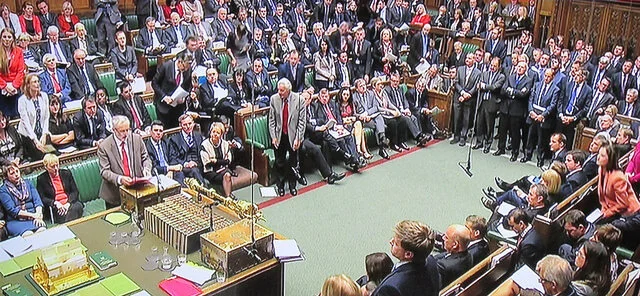
An election might lead to a parliament that is more inclined to a second referendum. Although with the Brexit Party and the Tories doing well in the polls this seem unlikely. First past the post still means that voting for the Lib Dems and their Bollocks To Brexit slogan is likely to achieve little, whatever Jo Swinson says. 

We need a plan

What then? Do a soft Norway style Brexit? No one wants that. That won't appease Leavers or Remainers. It might have once, but both sides are too polarised now to accept any form of comprise. I can't see a way forward.

We have been going around in circles on Brexit since parliament decided that it won't pass May's deal, the only deal that is realistically on the table. We can tinker with the details of that deal, but realistically our choice is May’s Deal, No Deal or No Brexit. These have been our options for six months we haven't been able to choose one. Yes, something did actually happen this week, which was refreshing, but we're not much closer to getting a resolution to Brexit either way.

I’m glad that something positive has happened. The last week has helped my blood pressure come down from the high it’s been at since Johnson became Prime Minister, a worrying sign for anyone who wanted a sane end to the Brexit situation. What is important now, is that those inside and outside parliament who oppose No Deal must come up with something more substantial than further delays. We need a plan to stop Brexit that is actually going to work.

 EU flag image created by Yanni Koutsomitis and used under creative commons.

Related posts
EU flag.jpg
May 19, 2022
Tory Brexiters are ignoring Northern Ireland because it’s inconvenient
May 19, 2022
May 19, 2022
EU flag.jpg
Feb 1, 2020
As Britain leaves the EU I am left disappointed in my county
Feb 1, 2020
Feb 1, 2020
EU flag.jpg
Dec 3, 2019
Is this election the last opportunity to stop Brexit?
Dec 3, 2019
Dec 3, 2019
EU flag.jpg
Sep 8, 2019
The anti-no deal side need to come up with something better than further delays
Sep 8, 2019
Sep 8, 2019
nigel farage.jpg
Jun 2, 2019
The sudden success of the Brexit Party should make everyone on the left very worried
Jun 2, 2019
Jun 2, 2019
Theresa May.jpg
May 26, 2019
The end of a career that no one will mourn
May 26, 2019
May 26, 2019
EU flag.jpg
Apr 6, 2019
Brexit has broken our politics
Apr 6, 2019
Apr 6, 2019
IMG_4111.JPG
Mar 31, 2019
Should the radical left support a People’s Vote?
Mar 31, 2019
Mar 31, 2019
Brexit-grenade.jpg
Mar 24, 2019
Brexit is eating a shit-sandwich, but No Deal is eating a grenade
Mar 24, 2019
Mar 24, 2019
EU flag.jpg
Jan 27, 2019
Labour must force May to drop her Brexit red lines
Jan 27, 2019
Jan 27, 2019
September 08, 2019 /Alastair J R Ball
Brexit
Comment
The-Big-Meeting.jpg

The Big Meeting is a celebration of radical left culture

September 05, 2019 by Alastair J R Ball in Film

Socialism can look like a series of policy positions. It can be described as a movement of politicians who are committed to, for example, renationalising the railways, raising taxes on the wealthy or spending more on welfare. It is these things, but that is the tip of a much larger iceberg. Socialism is a culture, a history, an outlook, even a way of being. This culture is what has given life to socialism over the decades. It is deeper and has more emotional resonance than policy positions. 

One of the institutions in this culture in Britain is the Durham Miners’ Gala, which takes place every second Saturday in July the city of Durham. It’s a celebration of radical left culture, a bringing together of like minds in solidarity and rallying point for the movement.

A new documentary called The Big Meeting, directed by Daniel Draper, has captured the vibrancy, diversity and energy of the gala for everyone. “Visiting and filming the Gala in 2016, I was exposed to the colour, noise and environment for the first time. It’s something I’ve struggled to articulate into words to people ever since,” Draper said. I myself have never been, but this film made we want to go. It captures how exciting it is.

The Gala began in 1871 and was started by miners’ trade unions. Today it takes place at the old Racecourse in Durham and attracts representatives from many different groups in the labour movement. Its history has been interwoven with the history of the trade unions, the Labour Party and the radical left of British politics for the last century and a half.

The gala consists of many things that are iconic of left-wing working class culture, such as brass bands (many affiliated to collieries), old banners of trade unions and radical organisations, marches and speeches from leaders of the labour movement. There is also live music from Billy Bragg and people selling radical books and pamphlets. All of these are staples of left-wing culture, but at the gala their power is felt. Colliery bands and banners come to life when they are in the presence of so many people who I appreciate the rich history they embody.

A sense of the scale and energy

Filmed over the course of the 135th gala, the film uses observational documentary techniques to immerse the audience in the event. Interviews and voice over and kept to a minimum to make space for close, fly-on-the-wall observations of the people attending the gala. This brings the atmosphere to life. As a viewer, you get a sense of what it is like to be amidst the crowds, marches and music. Montage is used to show the vast range of people, groups and activities and split screen is employed to show different events in the gala occurring simultaneously.

The film follows a few characters through their experience of the gala. This allows us to get a sense of the scale and energy of the gala. “I don’t think words can do justice to such an occasion - I feel like the Gala is a living and breathing organism, something not static, but immovable - a celebration of working-class life, not just today, but almost as if it takes place in the past and future simultaneously.” Draper said.

Corbyn-The-Big-Meeting.jpg

The film features grandees of the left. There is footage of a speech from Jeremy Corbyn, Bernie Sanders appears via a video message to the gala and the film also features interviews with Paul Manson, DBC Pierre and others played over old photographs and historic footage of galas gone. The later puts the current gala into its historic context and shows how it’s the modern embodiment of a radical tradition.

The presence of these well-known figures are supplementary to the film. The main focus of the documentary is on local gala attendees. We follow Charlotte Austin, a student at Oxford University whose family is of old Country Durham Mining stock, who volunteers for the People’s Bookshop selling radical left-wing books at the gala. There is also Laura Daly who is introducing a new banner celebrating women’s’ history in the labour movement. We meet Robert McManners who collects and chronicles working class left-wing art. It is through their time at the gala that we experience it.

TBM 011 copy.jpg

The film is an unvarnished portrait of the gala's history. There are candid discussions about the sexual encounters that took place at past galas, where the event was an opportunity to escape from the restrictive sexual mores of the day. There scenes showing the heavy drinking that some partake in. A more saccharine film would have glossed over these aspects, but this film shows what the gala is like and has been like.

This is not presented as a criticism of the gala, more a warm reflection of how the gala reflects all aspects of what people need from radical politics. Yes, there are great speeches outlining a vision for a bold new world, but also a chance for people to let loose and throw off the restrictions and judgments of society, if only for a little while.

Pride in mining communities

There are sombre moments to the film. There is a service that takes place in Durham cathedral where new banners are blessed and brass bands play that captures the solemnity of the history of the labour movement that is being celebrated and pays homage to the struggles of the past.

This reflects the gala’s long and proud history, but it’s also a modern event that embodies the radical left today. The film follows the introduction of a new banner celebrating the contribution of the woman of Durham. There are also interviews with LGBT activists, including representatives of Lesbians and Gays Support The Miners who were immortalised in the film Pride. There is a focus on current struggles for liberation and self-determination around the world such, just as there was a focus on Irish self-determination or Civil Rights in the past.

The-Peoples-Bookshop-The-Big-Meeting.jpg

The gala, and by extension this film, is a celebration of working class and radical left culture. It’s wonderful to see the joy and pride that the attendants have in our culture captured on film, as equally worthy the subject of a documentary as the Royal Ballet.

The film shows people with a huge sense of pride in coming from a mining community, which is not often depicted on film. The film shows people who are proud to be on the left, gathered together, having a good time and organising to continue the struggle for a fairer society. It evokes a strong sense of community, of everyone belonging to a radical left culture. This sense of everyone being together, being equally valid and partaking in a rich left-wing culture is the essence of socialism.

THE BIG MEETING will be released in UK cinemas 6th September www.galafilm.co.uk

Related content
Coded-Bias.jpg
May 11, 2021
Coded Bias shows how deeply embedded racism is in our society
May 11, 2021
May 11, 2021
Seaspiracy.png
Apr 27, 2021
Seaspiracy is weakened by framing the environment as a consumer issue
Apr 27, 2021
Apr 27, 2021
The-Big-Meeting.jpg
Sep 5, 2019
The Big Meeting is a celebration of radical left culture
Sep 5, 2019
Sep 5, 2019
peterloo_film.jpg
Nov 4, 2018
Everyone should go and see Mike Leigh’s Peterloo
Nov 4, 2018
Nov 4, 2018
the-death-of-stalin.jpg
Oct 22, 2017
The Death of Stalin
Oct 22, 2017
Oct 22, 2017
Jul 23, 2017
Living memory of death in war
Jul 23, 2017
Jul 23, 2017
Aylesbury Estate 1.png
Jun 25, 2017
Dispossession: The Great Social Housing Swindle
Jun 25, 2017
Jun 25, 2017
Oct 22, 2016
I, Daniel Blake
Oct 22, 2016
Oct 22, 2016
Mar 20, 2016
Fuck for Forests
Mar 20, 2016
Mar 20, 2016
Dec 6, 2015
Invisible Britain
Dec 6, 2015
Dec 6, 2015
September 05, 2019 /Alastair J R Ball
Film
Comment
Polar-ice.jpg

We need to act to stop the climate emergency

August 18, 2019 by Alastair J R Ball in Environment

We need to do something to stop the climate catastrophe. It’s not some distant prospect, it’s something that is happening now, with record breaking temperatures in summers and polar ice melting faster than expected. Wars, the mass migration of people and political instability are already being caused by climate change. This will only get worse. 

Many scientists agree that we have 12 years to take steps to limit the Earth to 1.5 degrees of warming. Whether this can be done may be decided in the next 18 months, through a series of upcoming climate summits. It’s no exaggeration to say that time is running out.

I am not alone in thinking like this. In the last year of so there has been an explosion of climate related activity. Greta Thunberg and her school strikes have gotten the world's attention, Richard Attenborough is using his star power to change minds, Extinction Rebellion have brought a new sense of urgency to the climate movement. Many people I know are going vegan, giving up on flying and trying to live greener to make some kind of impact.

I should do something

I feel that I should do something. I shouldn’t sit on the sidelines. I want to be someone who stands up and makes a difference. We are facing a crucial point in the history of human civilisation, a crossroads, and I want to be part of the process through which humanity finally accepts that we have to protect the natural environment. We have to do something to save millions of human lives and countless other species that we share this planet with.

Brexit has paralyzed politics in the UK. Remain and Leave exchange tirades of anger and nothing changes. I feel powerless when it comes to Brexit and I’m not the only one. What I want from Brexit, i.e. to stop it, seems like such as distant prospect and our elected leaders seem heedless to our calls not to throw the country off a cliff. On the issue of climate, I feel a sense of energy. Change is essential. If politicians don’t deliver it then they will have to be swept aside to save life on Earth as we know it.
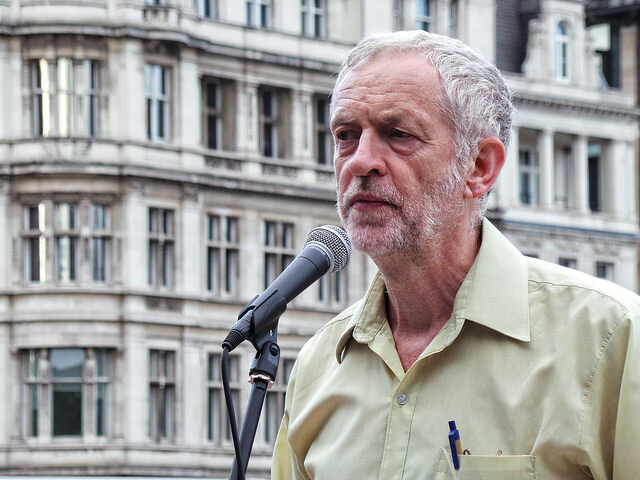
I have passion on this issue, but what should I do? I want to make a difference. I want to more than write a blog or retweet George Monbiot.
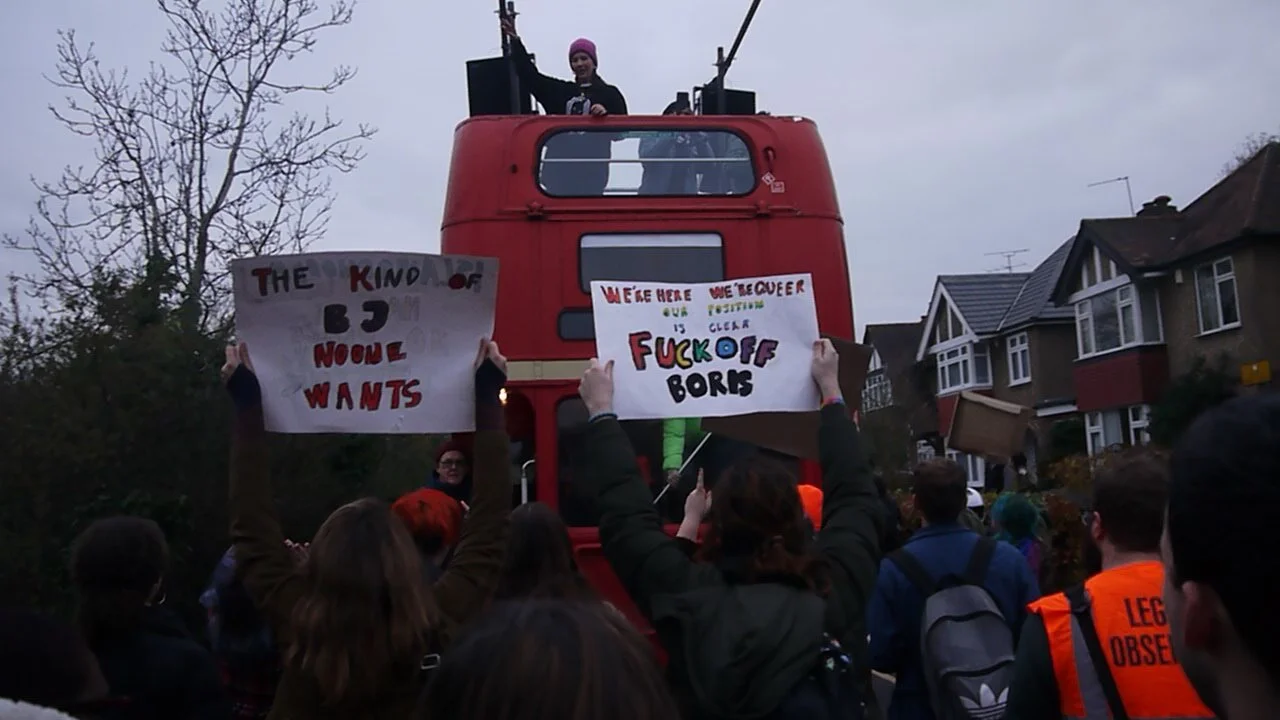
Individual change or systemic change?

I certainly could recycle more, buy less single use plastic, fly less and eat less meat. These are things I should do to lessen the environmental impact of my life. However, these are individual changes and I don’t think that is the solution to the climate crisis. A world that is not threatened by the climate catastrophe is one where we will probably eat less meat and fly less, however, it will certainly be a world without oil companies. To achieve this world there is only so much I can do as an individual when just 100 companies make 71% of global emissions.

I thought about joining Extinction Rebellion, they are the most radical and interesting group pushing for the change to our politics that is needed. However, their objective of getting a certain number of arrests from an action scare me. I am a wimp and honestly, I am not sure if I am prepared to go to prison for what I believe. This is a question I must settle with myself.

I have considered joining Greenpeace. To some degree their thunder has been stolen by Extinction Rebellion, however, media coverage is one thing but what results are Extinction Rebellion getting? Maybe it’s too soon to tell. Greenpeace have been raising the profile of the climate catastrophe for years and the sudden impact of Extinction Rebellion is partly a result of the work that Greenpeace and others have been doing for years to keep this issue in the public’s conscientiousness.

Maybe I am over thinking this when I should just start acting. I want to dive in and make a difference to avert the climate catastrophe. We all need to. We don’t have long to save life as we know it.

Related posts
Powerplant.jpg
Feb 13, 2024
By dropping the £28bn green pledge Labour are saying it doesn’t want the support of people like me
Feb 13, 2024
Feb 13, 2024
Extinction-Rebellion.jpg
Nov 14, 2022
The left needs to acknowledge the problem with the Green New Deal narrative, but it’s still our best hope against climate disaster
Nov 14, 2022
Nov 14, 2022
Extinction-Rebellion.jpg
Jul 27, 2021
The choice facing the Green Party
Jul 27, 2021
Jul 27, 2021
Seaspiracy.png
Apr 27, 2021
Seaspiracy is weakened by framing the environment as a consumer issue
Apr 27, 2021
Apr 27, 2021
British-Rail.jpg
Mar 16, 2021
How can British Rail’s failed Modernisation Plan teach us to ‘build back better’?
Mar 16, 2021
Mar 16, 2021
Extinction-Rebellion.jpg
Nov 24, 2020
Why the environmental movement needs mindbombs and critiques of capitalism
Nov 24, 2020
Nov 24, 2020
Extinction-Rebellion.jpg
Jul 14, 2020
Ecofascism, Malthusian economists and why we need less fearful stories about the environment
Jul 14, 2020
Jul 14, 2020
Jun 9, 2020
Why Labour needs a narrative about how the country can rebuild better after lockdown
Jun 9, 2020
Jun 9, 2020
Extinction-Rebellion.jpg
Nov 12, 2019
Why this should be the environment election
Nov 12, 2019
Nov 12, 2019
Powerplant.jpg
Nov 5, 2019
Will there be a technology fix to the climate emergency?
Nov 5, 2019
Nov 5, 2019
August 18, 2019 /Alastair J R Ball
Environment
Comment
  • Newer
  • Older

Powered by Squarespace

Related posts
Dec 11, 2025
Better content moderation for better discourse: A conversation with Madhuri Rahman of WeLivedIt.Ai
Dec 11, 2025
Dec 11, 2025
Oct 31, 2025
Farage’s new immigration plan is cruelty as a governing principle
Oct 31, 2025
Oct 31, 2025
Trump-rally.jpg
Sep 30, 2025
Dr. Strangelove goes to Tehran: The hottest new war nobody ordered
Sep 30, 2025
Sep 30, 2025
Sep 16, 2025
The right finally discovers that life sucks for Millennials, but guess who they still blame
Sep 16, 2025
Sep 16, 2025
960px-Official_portrait_of_Angela_Rayner_MP_crop_2,_2024.jpg
Sep 9, 2025
Rayner’s resignation is another unforced error from Labour
Sep 9, 2025
Sep 9, 2025
Union-Jack.jpg
Aug 20, 2025
Who really holds power? The cultural illusion of middle-class dominance
Aug 20, 2025
Aug 20, 2025
Labour Party in parliament.jpg
Aug 2, 2025
What would Max Weber make of our politicians?
Aug 2, 2025
Aug 2, 2025
Jul 28, 2025
Why social media platforms spread the worst political messages
Jul 28, 2025
Jul 28, 2025
Trump-rally.jpg
Jun 20, 2025
Elon Musk and Donald Trump: The Beavis and Butt-Head of right-wing edge lords
Jun 20, 2025
Jun 20, 2025
Capitalism.jpg
May 27, 2025
“That’s Your GDP”: Labour’s big growth delusion
May 27, 2025
May 27, 2025